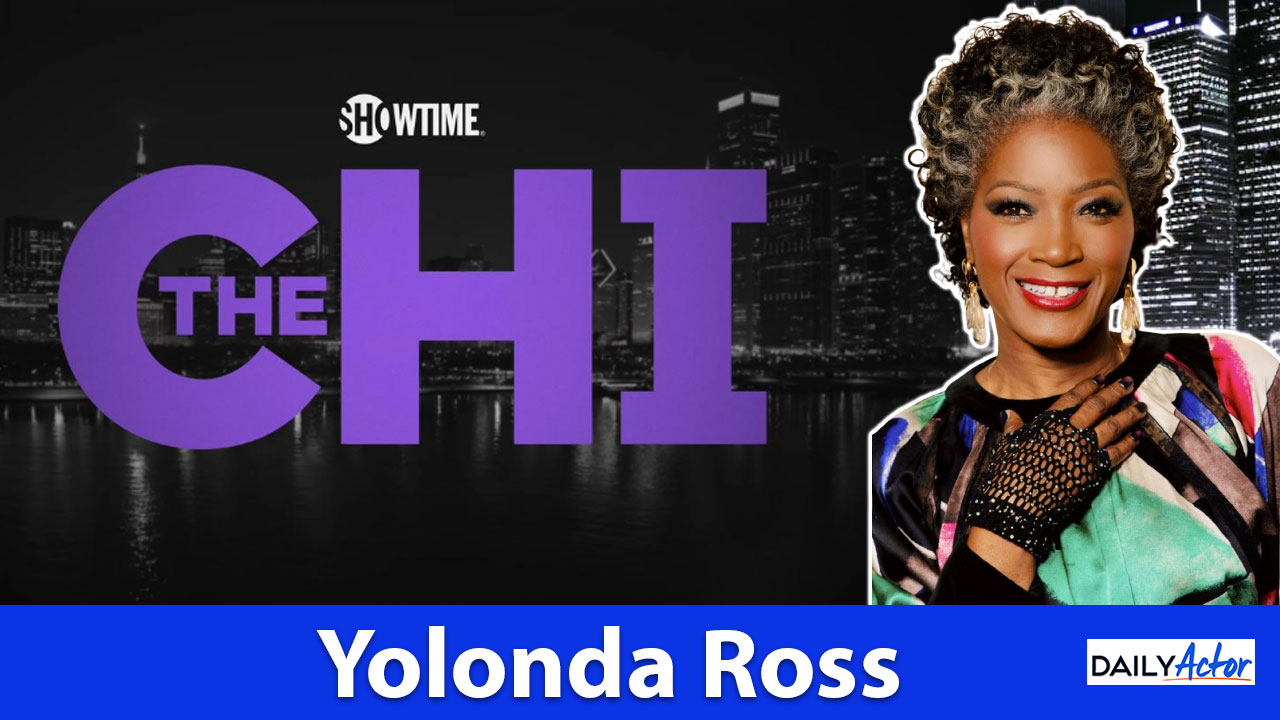
After seven seasons on The Chi, Yolonda Ross had more than earned a sense of ownership over Jada Washington. She had lived with the character, helped shape her and watched her go through love, motherhood, illness and everything in between. So, when Ross found out that Jada’s cancer would return and the character wouldn’t make it, the news was understandably bittersweet.
The other half of that news, though, was something Ross had wanted for a long time: the chance to direct an episode of the show. For Ross, saying goodbye to Jada came with the opportunity to step behind the camera, work with castmates in a completely different way and finally take on a challenge she had been preparing for throughout her time on set.
In this interview, Ross talks about saying goodbye to Jada, why the character’s death didn’t really hit her until the episode aired, directing The Chi, and working with the actors from the other side of the camera. This interview has been edited for length and clarity. Watch the full conversation in the video below or on our YouTube channel.
I’ve never had the opportunity to play a long-running character. Did you ever fully take ownership of her? Like, “I know her inside and out. I don’t think she would do this or do that?”
Yolonda Ross: Yeah, I think you do. You’ve worn that person’s story, you’ve helped create that person. Yes, they’re characters; yes, they’re written, but they’re coming through you, and so you give them life. So there definitely was a point, and it might have been early on, I would say at least by Season 3.
How did you find out your character was going to die?
Yolonda Ross: There was a meeting, a Zoom meeting, and I didn’t know what it was about, and it was a good news, bad news situation. I chose the bad news first, which Jada’s not going to make it, her cancer’s coming back.
What was the good news?
Yolonda Ross: It was to direct. I’ll take it. I hated to be leaving this character, because I really loved playing Jada. I loved working with everybody, but to get the opportunity to do something that I’ve wanted to do for so long on the show was a great trade-off.
The funny thing about it, though, is that none of us knew it was going to be the last season of the show, so it really is a huge positive for me.
I’m going to get to your directing episode in a second, but I watched that last episode you were in. Was that your last day of shooting?
Yolonda Ross: Yes, that was the last day of us shooting the show. It was weird because I’m lying on Darnell’s [Rolando Boyce] lap, and when I opened my eyes, the whole crew was there because I was gone. They were all there, cast and crew, everybody had come in for that scene. It was very surreal to be in that, because it’s like, I just went through something mentally, and then it’s a sad, happy goodbye because it’s the end of this season, and just everybody’s there. It’s the end of that character.
How did you prepare for that particular day and that particular scene? I have a heart of stone and that scene almost got me.
Yolanda Ross: Almost? We didn’t get you?
I told you it’s stone!
Yolonda Ross: That one was easier for me than some others, because in that case she’s sick, and it’s everyone else around that has it really hard. I would say the same thing, probably, in real death, they are a lot of times ready to go, because whatever the sickness is has done so much to them. It’s harder on everybody around you. In that case, it was for me as well.
It didn’t really hit me until it aired and I wasn’t Jada, but I was looking at Jada being gone like the exact feelings I felt was I lost a friend. I lost somebody I really liked. She’s gone, she’s not coming back, and I was just very sad.
Now, getting to directing, did producers know you wanted to direct prior to offering it to you?
Yolonda Ross: No. I submitted work. I had shadowed the first season, so I did want to, but at the end, that trade-off happened.
What was the hardest thing about directing for you?
Yolonda Ross: I don’t know. I wouldn’t say hard but there were some different things for me. My character Jada was always indoors. It was really cold, and a lot of those scenes are outdoors so I had to suit up, put on the cold gear.
All the prep was new to me, because you can literally have a full day of meetings, just meetings, every department, and there were people that I met that I had never met before. As an actor, you don’t come across everybody. It was more exciting and just a huge gift because I love learning, and you can only learn by going through something.
Being an actor that has worked on a lot of sets, worked with a lot of directors, have done my own shorts, I had an idea of all the things and had done a lot of the things, but I had never done TV as a director, so to get that opportunity, you’re doing and learning all at the same time.
One of the biggest, more complex scenes for me was with a scene with Jake [Michael Epps] and Desiree [Sophia Echendu]. We’re building a scene out of nothing and we have the script, but there is no location, so we took a corner out of some big office looking thing, and built what looked like a photo studio. My idea for that was to have her saying her lines to him, him trying on clothes, doing this photo thing, and then the lights change and there’s to be a moment between them where they get enraptured in each other. Then the lighting changes back to studio lighting, and she says, “why don’t you come to this lunch thing with me?” That was a huge undertaking.
I remember the feeling when we got to the beginning of that scene. I was like, this is going to be a lot. There’s movement, there’s lighting, there’s music, there’s all these things actively happening in the scene and you don’t want it to come off chaotic and crazy, it all should be just flowing together.
Then at the end of the whole thing, the scenes go through the editing process, and a lot of it was just cut out, because they cut a lot of the dialogue out of it. I know what was shot, so there’s that feeling you wish you could see the whole moment happen, but it’s cut down, so it’s just a few moments.
You’ve worked with a lot of the actors but was it weird now that were in charge? Was it intimidating? You don’t want to overstep because you’re friends with them, I would imagine.
Yolonda Ross: I know what you mean. I was more friends with them than actually worked with them, because literally, on the show, I worked with Rolando Boyce, Jacob Lattimore, and then a couple other people here and there. It was really just the Darnell character and Emmett that I really worked with. Some of them I had never been in scenes with. That was exciting to see how they work, how they do their thing.
I’m very compartmentalized anyway, so when I am directing, that’s it, I’m that person. But you also know when I’m acting, I’m a certain way.
I like to get the thing done. I like to try things, if possible, but it’s like, I’m thinking about all the things all the time, as an actor and a director, and wanting the best for you.
So that’s the one thing I feel they knew going into it, that I was not going to steer them wrong. I was going to listen to them and we were going to come out with some fire at the end of it, and I’m really happy with the episode.
At the end of the day or week, what was more tiring, being an actor on set or being the director?
Yolonda Ross: Well, tiring can be sitting around doing nothing for hours. That’s acting. I mean, I like the exhaustion of directing, because you know you’ve done something. You know you’ve touched everything in the episode. Even after you’ve done it, your mind is still going. What do we have to do tomorrow? Did I get this? Did I get that? It’s a different set of muscles. I love the exhaustion of both.
I don’t want to keep you forever, but I want to ask you about some upcoming projects. There’s a Basquiat film and somehow Jeffrey Wright is in this one as well. Is he legally required to be in every single Basquiat movie?
Yolonda Ross: You know what? It might be a contractual thing. We’re not mad at it, either.
I do think he should be in everything.
Yolonda Ross: Well, yeah, but let me be in everything with him somewhere in the mix too. He’s great. We have a couple scenes together. Kelvin Harrison is amazing. I’m playing his mom in the film, so I am really looking forward to it. To be a part of Jean-Michel’s legacy as the artist, as this black man who did what he did in a time where black artists weren’t really valued, he was the start of something in the ’80s. It’s a different take on the artist that we know as Jean-Michel.
What else do you have coming up?
Yolonda Ross: Don’t Ever Wonder with Nia Long and Lorenz Tate directed by Eugene Ash who did Sylvie’s Love and Flowers Para Las Muertos, which was so much fun. That’s a dark comedy, something I have never done, so I’m very excited about that.
Finally, what’s been your worst audition ever?
Yolonda Ross: I’ll just say this, I am not a strong auditioner. I am a great actress. This was for a play, and it was for a Lynn Nottage play and this was early on for me and I had worked so hard on this audition. I get in there and started doing the thing, but then lost where I was at. This is theater, it’s not TV, it is not a film. You start saying some stuff that’s not on that page, they let you know about it. So, I got told about it. I didn’t mean to get off, so I had to walk out of there quietly.
I’ve been in situations like that before, it’s never fun.
Yolonda Ross: It’s not like you mean to go off book, but then when somebody actually says something about it, it’s like, ‘Oh, wow.’
Yeah, it’s like yeah, ‘I didn’t mean to do that!’
Yolonda Ross: Give me a break!