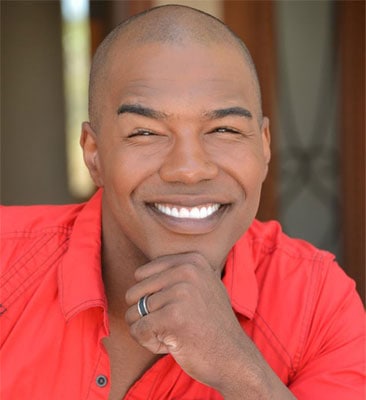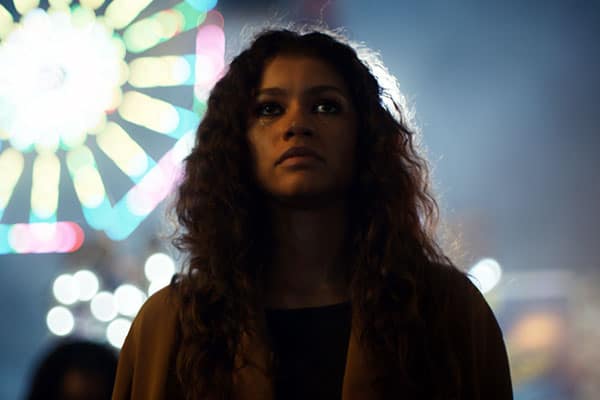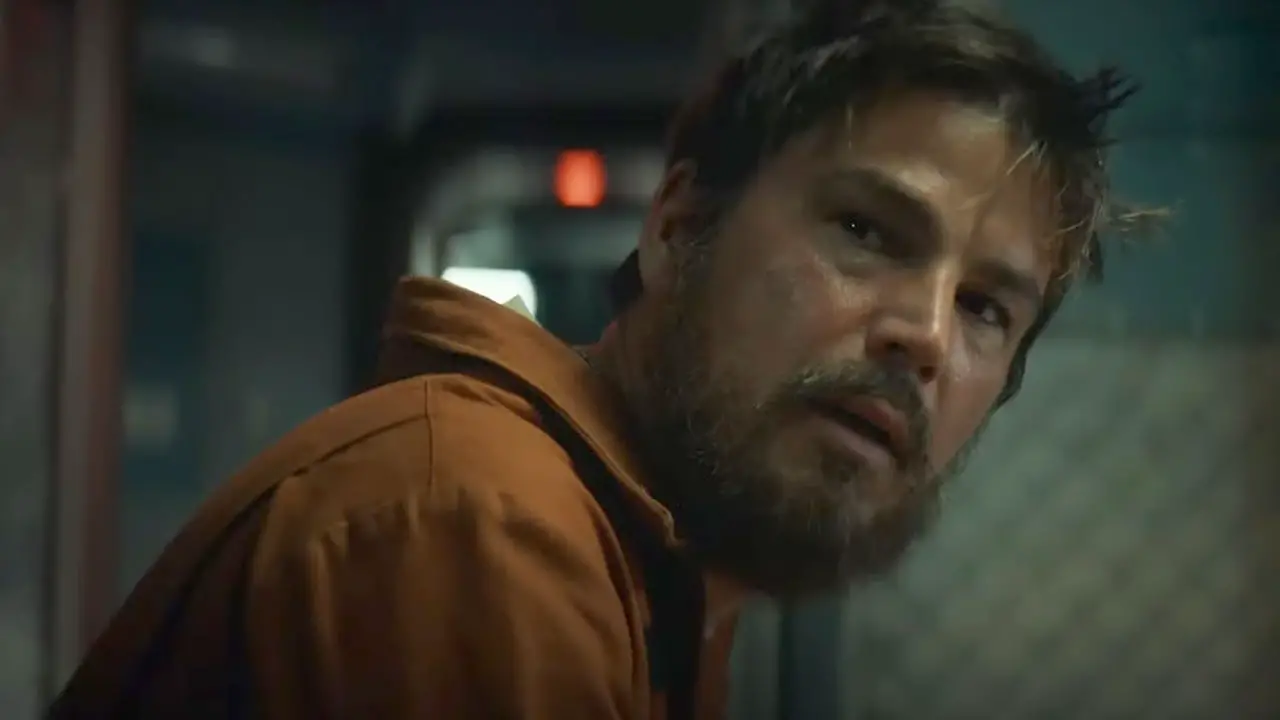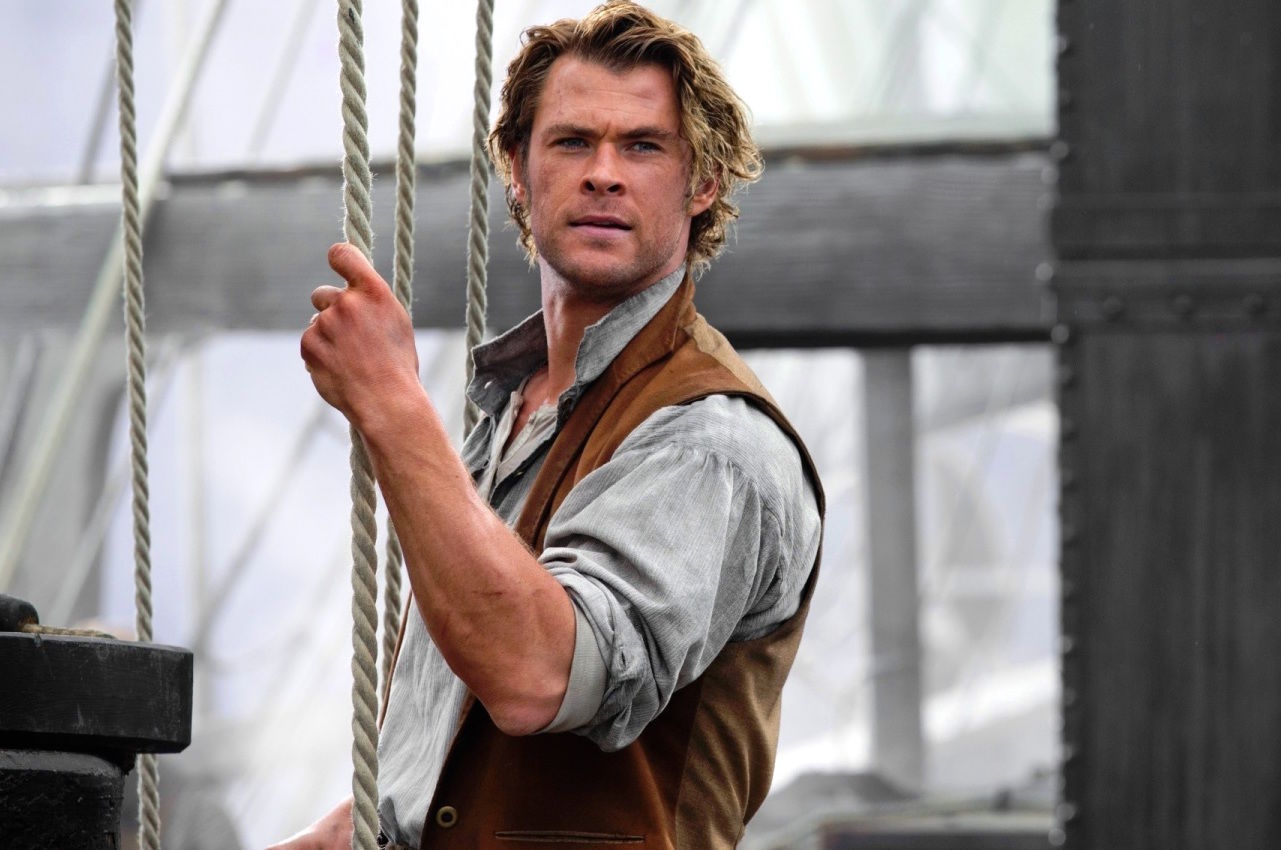
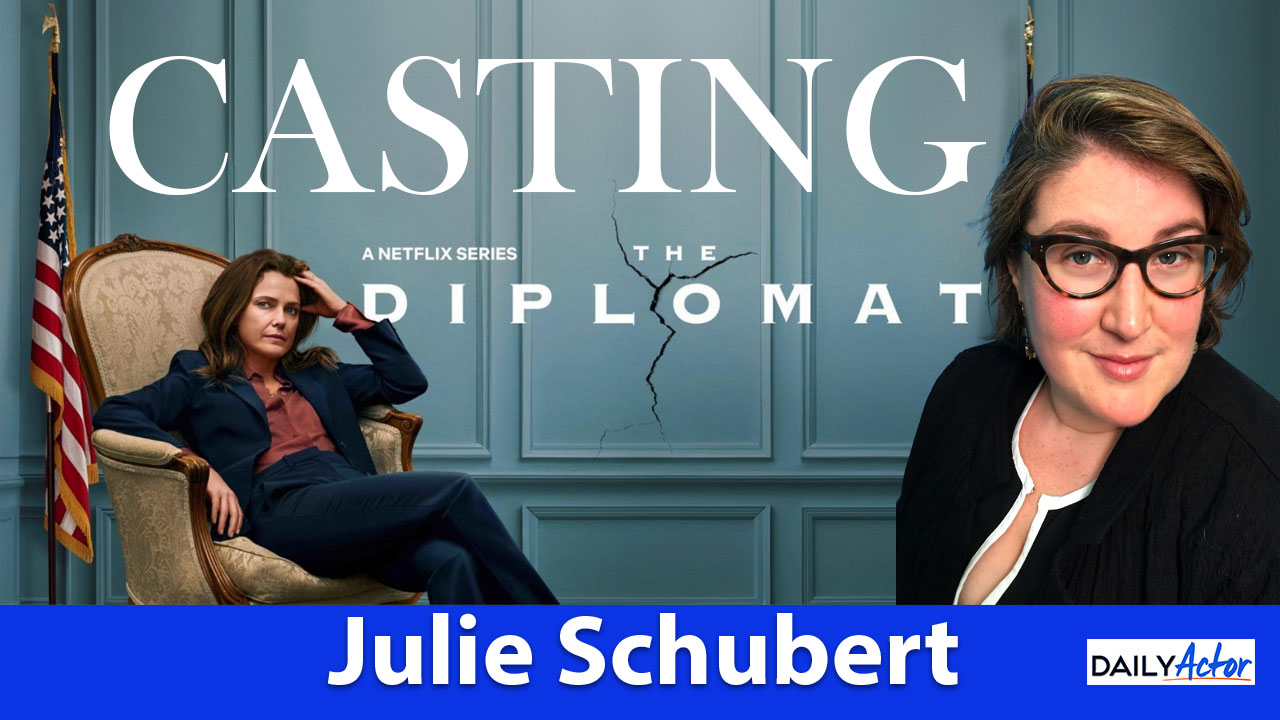
Casting a show like The Diplomat is no easy task. The Netflix series, created by Debora Cahn, is packed with sharp dialogue, political intrigue and characters who can be funny, cutting, vulnerable and calculating, sometimes all in the same scene. At the center of it is Keri Russell as Kate Wyler, a career diplomat whose professional life is complicated by international crises, high-stakes politics and her relationship with her husband, Hal, played by Rufus Sewell.
For casting director Julie Schubert, putting together that world meant finding actors who could handle the tone of the series and fit together as a believable ensemble. Along with Russell and Sewell, the show features a terrific cast that includes David Gyasi, Rory Kinnear, Ato Essandoh, Michael McKean, Allison Janney and Bradley Whitford. In our conversation, Schubert talked about why Russell felt right for Kate, how McKean came to mind for the role of the president, working with her casting partners in London to find the show’s British actors and whether casting directors can be “typecast” the same way actors can.
She also shared some great advice for actors, including what she really looks for in a self-tape, why specific choices matter more than perfection and how demo reels are useful for casting. Plus, she told me about one of the wildest audition moments she’s ever experienced where an actor pulling out what looked like a very real gun in the audition room. This interview has been edited for length and clarity. Watch the full conversation in the video below or on our YouTube channel.
I didn’t know this, but casting directors also have to audition for work like actors.
Julie Schubert: We do, yeah.
You said in an interview that before you went to talk to the creator, you had to do some preparation. What does that preparation look like?
Julie Schubert: It’s sort of different for every job, but what I do is I get the script, or whatever material they want to give us, because sometimes you don’t get scripts, sometimes you get 3 scripts, sometimes you just get the idea that’s based on a book, and so you have to read the book to kind of understand what the story is and what the art could be.
So, I read everything, which could take a few hours. I also read it again, because obviously there’s always stuff you miss in that first go-through.
For a series, I take a look at the series regulars, the ones that I know are going to be coming back episode after episode, and season after season. I put together kind of lookbook, an idea of who I think creatively could be really interesting. Because a lot of times when you are working with these creators, the directors, the showrunners, you want to make sure that you’re on the same page creatively, and that you are aligned, because all of this is so subjective. So, my idea of what could be a really cool cast could be very different than what the showrunner had in mind. But, in this case, we were aligned in a great way, and I was very, very excited about it.
But that’s what I do. It can take days to put stuff together, but I always want to make sure that, aside from the creative, that we also enjoy talking to each other, and because we’re going to be working together for months, you know?
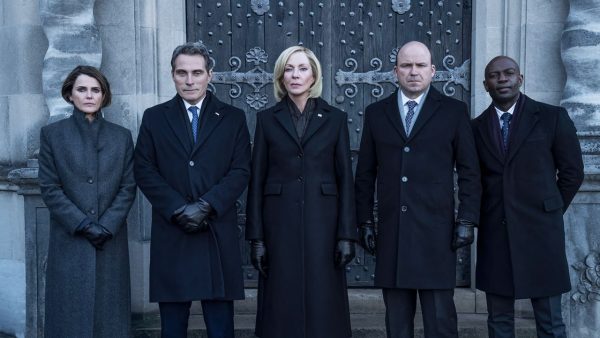
Did Keri Russell immediately pop into your head?
Julie Schubert: I mean, how do you not look at something and think of Keri Russell? She’s just so good.
The way it works with someone like Keri is that you share material with her and see if she responds. She’s got an incredible body of work behind her, and you can see through snippets of that how she might approach this role of Kate, and we’re really lucky that she looked at it, and she was like, ‘absolutely, this sounds amazing, and I’m on board.’ I think that’s happened with every piece of casting in this series. We got really, really lucky that a lot of our first choices said ‘yes.’
I also think it’s a testament to the material. I mean, it’s rich, it’s very character-driven, it’s funny, it’s incredibly smart, it feels like an actor who loves to play in the nuance would really dig something like this. It all worked out, I think.
Is it easier on your end when somebody like her signs on to get other actors on board?
Julie Schubert: Yeah. And I think in this case, the material really spoke for itself. Having Keri come on as the lead, and sort of spearheading this is just, like, a massive bonus, you know what I mean? Because she’s known for being one of the most wonderful people to work with, she’s incredibly professional, and she makes it a good set.
As I was watching the show, at the end of each season, I’m always hoping that it doesn’t transition to America, because I don’t want to lose all these great British actors. How did you find them? David Gyasi who plays Dennison, has the greatest voice. I want that voice.
Julie Schubert: Who doesn’t, right?
I’m very fortunate to work with some incredible casting partners out of London. Lucinda Syson and Natasha Vincent, they are geniuses at what they do, and we have a beautiful collaborative relationship. They know the pool of actors in London more than I do, and so it’s become a really beautiful symbiotic relationship that I think translates on screen in a great way.
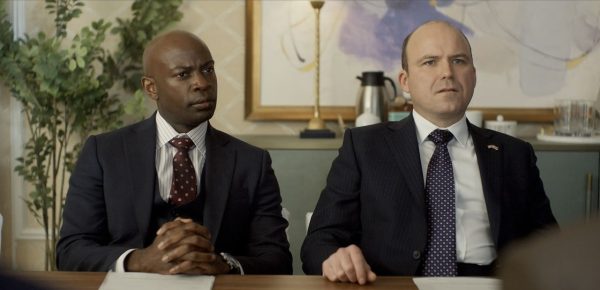
Was there any reservation on Rory Kinnear‘s end to take his role? Because he played the Prime Minister in that great, memorable Black Mirror episode.
Julie Schubert: We did talk about it, but I also feel like it was more on him whether or not he felt comfortable than it was for us because when you have an actor like Rory, who’s just so incredibly brilliant, and he brings something different to each role, like, the prime minister he played in and Black Mirror is very different than the Prime Minister here, and I don’t think you can combine the two.
But it was up to him whether or not he felt comfortable, and he could see a way into this character in a different way than he did before. I could not think of a better Prime Minister than Rory Kinnear. He’s great.
The president hangs over each episode in the first part of season one. We never see him and then all of a sudden, Michael McKean walks in. It was, unexpected casting, but so perfect.
Julie Schubert: I’m so glad you think that, because that was actually… I even had the email exchange, because Deb was sort of reaching out, like, “I think we have to start thinking about the president.” I was like, “I think Michael McKean would be brilliant.” He’s the face I saw when I was reading this, and then we got into other pieces of casting, and it kind of went away, and then it came back, and Deb was like, “You know, Michael McKean’s a great idea,” and I’m like, “Yes, it is!” And then we went out, and he said yes, and here we are.
How did he pop into your head?
Julie Schubert: I think the beauty of these scripts, and what Deb and the writers did is they really created very filled-out characters. They had depth, they had texture, they had soul, and when I read something, I’m listening to the voices of the actors that I know and love and are excited about to see if it fits in. It feels very woo-woo, the way I say it, but there’s something about the way that it’s being written and the way that the characters are structured that speaks to me in a way that sort of guides me to who I think the actor is that would play this brilliantly.
I mean, there’s so many people we could talk about for the president, and each one of them would have played it very differently, but for me, and I’m so excited that I was working with a team where we were so aligned, it was just so clearly Michael McKean. The way that it was written, and the way that it was approached, I just felt really, really strongly about it.
You mentioned that you got the people you wanted but who was the person that was hardest to cast?
Julie Schubert: That’s a tough question. I think it was more making sure tonally that we understood where the character was going through the season so we could really talk about it holistically in sort of a bigger way.
When we start these casting processes, for each character we do a massive list, it’s not just one name, we go to that person, and that’s it. I put together a list of people that I think could be creatively interesting in very different ways, and we have these sort of larger organic conversations of, like, ‘this actor brings this to the table, and I think would tell this story in the long form. This actor, I think, gives you these different notes that could play really well.’
And then on top of that, you talk about the relationship between the actors and the characters, and how you can make sure that those relationships resonate with the viewers.
So, when we were casting Keri and Rufus, you look at their body of work, and you see how they approach things, and you feel like they would parry well off of each other. Not only are they right for the characters, but they’re right for each other. And so that’s kind of how it all kind of hopefully organically comes about.
Everybody that is cast was on that initial list and was part of that initial conversation, and then it became more about how do we create the fabric of the cast to make sure it’s cohesive.
Your career, you’re able to float from genre to genre. Can a casting director get typecast?
Julie Schubert: We absolutely get typecast the same way actors do. No one would ever hire me for a comedy, because no one thinks I’m funny. I think I’m very funny, but no one.
The Diplomat has lots of comedic stuff in it.
Julie Schubert: Exactly. I think when you look at it as a whole, it’s still an hour drama, it’s still considered an hour drama, right? And you have this beautiful pattern and all of these notes, and you have to get the timing right, and you have to understand the humor in it to make it work and make it sing the way it’s written. But no one looks at that and says, “Oh, Julie can cast a comedy.” That’s just not a thing that happens.
In my dreams, I would love to cast a comedy at least once. It’s a bucket list, but it’s gonna take a lot of work for anybody to trust me in that regard.
Well, I would hire you.
Julie Schubert: Ha! Thank you, I appreciate it.
When you’re watching a self-tape, I’m sure the dialogue starts sounding all the same after you’ve watched a bunch of them. With that though, what makes an actor stand out where things aren’t the same as everyone else?
Julie Schubert: So, I want to address that, because I think there’s a misnomer that people are just going through self-tapes and skipping and not paying attention to what people do.
The way that I work in my office, I do in-person auditions, I do Zoom auditions, and I do self-tapes. I’ve never really been interested in this idea of it only being this sort of tape situation. I think it really helped us during the pandemic, but none of us got into this business to be working alone, so I do have in-person auditions, but in terms of the tape part of it, I’m only ever going to give enough auditions on tape that I’m going to be able to give my full attention to.
So, whatever I assign you, I’m watching it from start to finish, which is why I also don’t accept unsolicited tapes, because I’ve planned out my time and my energy in a way to make sure that I’m giving attention to the actors that I’ve requested.
The things that I look for in a self-tape are choices, you know? Specific choices, understanding of character, understanding the environment, understanding the scene, breaking it down, the who, what, where, when, and why, really having choices within those moments. Even in a one-line, you have these choices, right?
Because if I see something and there aren’t any choices being made, I don’t know what to do with that. I can’t help you there. But if you come to me with some choices, whether it’s right or wrong, that specificity is what I’m looking for, and I can work with actors that come with a specific point of view. And that’s basically it.
And that I can see your eyes, because if I can’t see your eyes, I don’t know, I don’t know what you’re doing, because everything happens in your eyes.
You’ve seen self-tapes where you can’t see eyes or faces?
Julie Schubert: I’ve had self-tapes where people stand all the way back. I see their full body, but they’re also in shadow, so I truly have no idea what’s going on. I’ve gotten self-tapes where the sync is off, so it becomes like a movie where someone tried to dub it, and it didn’t actually work out very well. I’ve had auditions where I don’t hear the actor, I only hear the reader, because the reader’s right by the microphone, and the actors in front of it so it becomes a distraction in that way.
Outside of that, I’m really not particular about self-tapes. I understand that there are limitations to what we have. People are in hotel rooms, they’re taking road trips, they have their kids in the other room. There’s a dog that you cannot put away. I don’t care about stuff like that, because at the end of the day, I’m not sending that tape unless I’ve worked with you in some capacity.
So, think of a self-tape for me as a first overture, if nothing else. Just a way to introduce yourself and a way to introduce your point of view, and then from there, we take it to that next step where we Zoom or if you’ve decided not to Zoom with me in the first place you come in to me in person.
I think in about 30% of my self-tapes, you can see my cat’s tail or my dog walking by.
Julie Schubert: I don’t care. You have a cat? I’m like, “Oh, a cat.” Don’t worry about that for me.
What about demo reels? What are you looking for with those?
Julie Schubert: I use demo reels as a way to introduce talent that wouldn’t come in and audition. I think it’s a helpful tool to kind of look at.
If I’m asking you in to audition, I don’t necessarily need your demo reel unless I want to show something from it that shows a different point of view, like, maybe the sides don’t necessarily talk about where the character’s going, but there’s a piece on your demo reel that I think could be really interesting to also show that other side that I know is coming down the pike, in which case I’d show that scene. But for me, I don’t really need them that much.
What’s the worst or craziest audition that you’ve been a part of?
Julie Schubert: Someone pulled a gun on me in an audition room.
An actual gun?
Julie Schubert: It turned out to be rubber, but it was incredibly realistic looking, and they hadn’t told me beforehand.
That was definitely a memorable audition, and I would never encourage anybody to do that in person. Please don’t do that.