
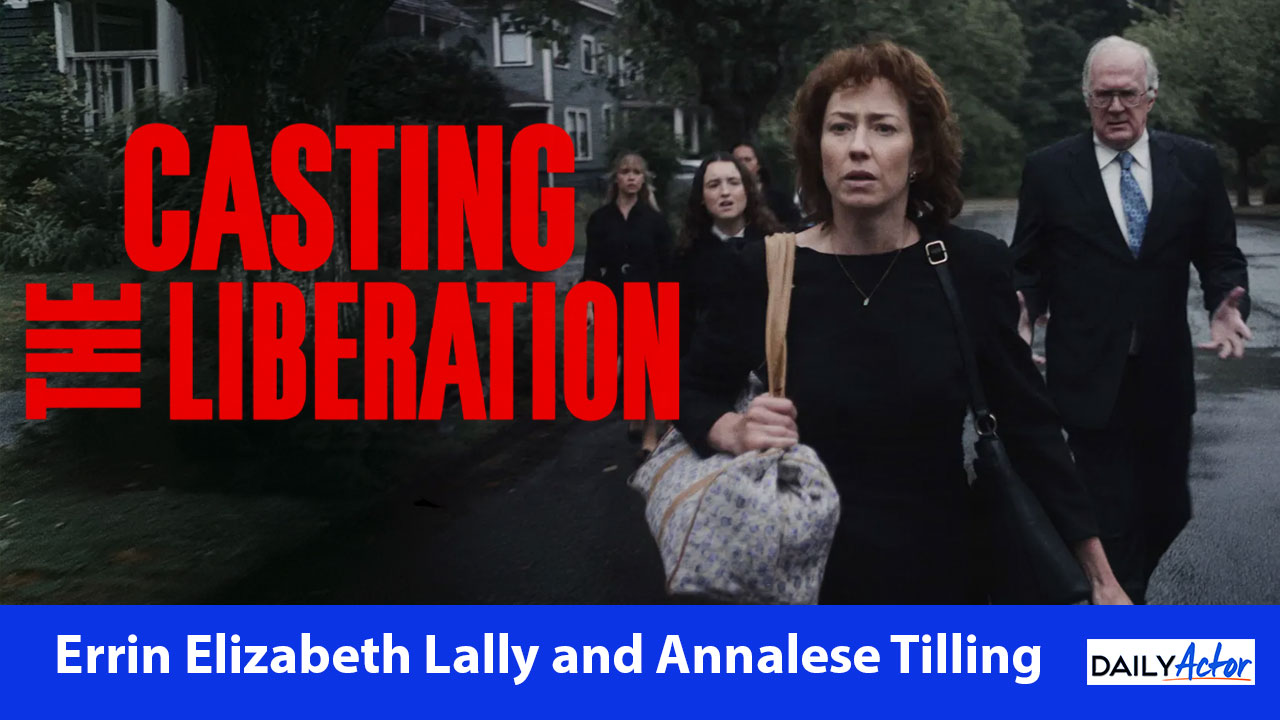
In The Liberation, Carrie Coon plays a suburban mother who falls under the spell of a charismatic commune leader played by Lily James. To find the women who would make that commune feel like a place you might actually want to join, casting directors Errin Elizabeth Lally and Annalese Tilling turned to actors in Vancouver.
Director Guy Nattiv drew on his own grandmother’s story for the film, which is set in 1980s New Jersey. When Rita (Coon) leaves her husband (Tracy Letts) to join the all-women commune, her daughters (Bella Ramsey and Odessa Young) go there to bring her home. Once they arrive, they start to understand what drew their mother there in the first place.
I talked with Lally and Tilling about how they put that group together, what they looked for in the actors, and why they sometimes go back to a self-tape they saw six weeks earlier. I also asked a question about self-tapes that as an actor, I’ve been wondering: If you’ve got two takes you really like, when is it worth sending both? Watch the full conversation in the video below or on our YouTube channel.
This movie is fantastic. I loved it from start to finish.
Errin Elizabeth Lally: We were very excited to be a part of it, and it was amazing to work with Guy and Jamie and watch their process. There’s maybe one movie a year where you have a writer-director with such a personal story to tell, and those are always our favorite processes.
How closely did you work with Guy?
Annalese Tilling: Oh, very. Everything was led by him and Jamie. We started with self-tapes and did a lot of in-person callbacks. It’s really nice to work one-on-one with actors and watch Guy work with them, too. The final decisions came down to him.
Was there a point where you liked someone, he was on the fence, and you tried to twist his arm?
Errin Elizabeth Lally: We don’t twist arms, but if we haven’t found what we’re looking for after a number of rounds and we know there was someone excellent in round one, we’ll ask them to go back and look. Often they go, “Oh yeah, you’re right.” Sometimes people want to see more just to see more. I can’t remember a particular time when that happened.
But there’s often a time when you’re like, “Hey, maybe we should go back and take another look at these two or three people we sent you six weeks ago.”
Then they’ll come in for a callback. Especially with a movie like this, you want to make sure people are open to playing and can do different versions of the same thing in different takes. That was really important.
There wasn’t just one way to play every scene. We wanted performers who could pivot and shift and hold their own alongside Carrie, Lily and Tracy. We needed people who weren’t going to fade into the background when they’re with such powerhouses.
How did you guys initially come on board?
Errin Elizabeth Lally: There’s a producer who works in Canada named Dan Beckerman, and he brought the project to us when he came on board. We had a few meetings with the creatives before we were hired, and we all seemed to have the same vision. Once we’d all met and talked about what we saw it looking like and heard their ideas, it all came together.
How close was the vision you imagined at first to what we see now?
Annalese Tilling: Well, the vision really was led by Guy and the script. It was there on the page, and there was a real personal connection and story there, obviously. We just wanted to collaborate, bring that out and show what we could offer here in BC to help.
Errin Elizabeth Lally: And maintain the time period of the ’80s. They had a great lookbook for what the group would look like, and we knew we could find performers in town who would help move it along.
Annalese Tilling: And feel real, with a mix of backgrounds and ages. I think one of the key points was that it could happen to anybody. Depending on what’s going on in your life, at the right place and the right time, you could be susceptible to someone who’s so persuasive.
How difficult is it to find people who have that period look? The ’80s weren’t that long ago.
Errin Elizabeth Lally: It’s getting harder. But there’s a variety of people everywhere, so it’s about turning over rocks. Obviously, hair, makeup and the setting all help.
The faces you cast were just so perfect. They felt lived-in, and there wasn’t one false face in the bunch.
Errin Elizabeth Lally: That’s where the handpicking comes in because it’s a period piece.
Was it difficult to round out the cast like that?
Errin Elizabeth Lally: I always say it’s sort of like chipping away at a sculpture. You find one piece, and it doesn’t happen overnight. You have ideas by having bad ideas sometimes, and then you go in a different direction. You don’t know until you’ve shown the team people they aren’t interested in. It becomes a bit like chipping away at a sculpture.
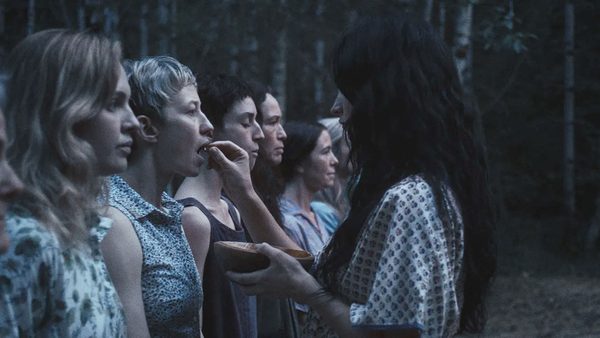
For this project, we wanted performers who might be willing to cut their hair and performers who were willing to be nude. We wanted a bit of everything in the group, and obviously not everybody is willing to do all of those things.
Annalese Tilling: It does help when the scene is so powerful. The dancing scene around the bonfire was so, so powerful. When something is that integral to the story, it’s a lot easier for people to come on board and push their own boundaries. They can see the creativity and how it moves the story forward. It was such a great scene.
Lily James. I’ve seen her in a ton of stuff, but holy crap, she was just outstanding here. How did she come on board?
Errin Elizabeth Lally: Lily and Carrie were attached before the project came to us, so we were lucky enough to know we had them and Bella and Odessa. When we were filling out the group, the world was our oyster in terms of the best talent in Vancouver.
Being able to go on location for six weeks and work with that level of talent, you can’t buy that. You can’t go to an acting school, and there’s only so many workshops you can take. It was really fun trying to figure out who the other ladies would be who’d go with Lily and Carrie and have this amazing experience, and also do what the film needed them to do and be free and open.
When you guys get a film like this, are you automatically inundated with emails from actors?
Errin Elizabeth Lally: From agents, for sure. We’re also making a lot of calls to explain who the team is, how great the project is and how the script is different from things we’ve read recently. When you’re taking on a project that’s so personal and it’s a writer-director, you treat it differently. You want to respect the story they’re trying to tell. It’s different from some of the more popcorny films.
Sometimes there’s a lot of outreach to explain why this is different and why we thought of a particular actor, even if their agent hadn’t thought of them for it. We do a lot of brainstorming and thinking outside the box about who can fill the world we talked about with Guy. The agents haven’t been part of those creative conversations, so we’re reaching out to find the best people we can.
I want to ask about the acting side of things. What do you guys look for in self-tapes? What makes a person stand out?
Errin Elizabeth Lally: That’s the proverbial question we’re asked all the time. Sometimes you can watch ten self-tapes that you think are good. Then you get to number eleven and you’re like, “Oh, wait a minute. That’s the one.” It’s really hard to say what’s different. If we all had the answer to that, we’d all be Tom Cruise.
Annalese Tilling: I think it’s when a performer is so in the character, out of their head and familiar with the material. I know that can be hard with the turnaround for self-tapes. You have a lot of material and there’s a lot else going on in a performer’s life. This sounds so cliché, but we’re not seeing the acting. We’re just so into the performance that we find ourselves getting lost in it.
You see a version of the character, and it might not be the only one. You might have two people you’re blown away by who are completely opposite, but both are valid and really interesting options. Those are great conundrums to have. We love to present multiple ways of portraying a character, and seeing what other people on the team lean toward is part of the collaborative process.
On self-tapes, do you guys like to see two different takes, with completely different views of what the character might be?
Errin Elizabeth Lally: Sometimes. When you flip a coin, sometimes you instantly make a decision and know that’s the right one. But if you flip a coin and still can’t make a decision, then they’re probably both excellent.
Many times, if you think about it, you know you like one better, or one felt better for you in that character. We’re always happy to watch multiple options, provided they’re different.
Annalese Tilling: If a performer is wondering, “Is it a little too big? Is it a little too subdued?” and the two versions are really different, then absolutely send both. Sometimes we’re all finding out as we go what the team is looking for.
What about demo reels? Are you still watching them? What do you like to see in those?
Errin Elizabeth Lally: We watch them. I actually find them very useful for comedy because there’s not a lot of comedy shot in Vancouver. There’s a bit, but it’s mostly dark and rainy, so we tend to get those shows. If you have something on your demo that lends itself to comedy, it’s always fun to watch, and we like to go back and watch them sometimes.
It’s also great to see people in a professional light, on professional shows. We don’t watch everybody’s demo every time we’re sending them because we’re usually quite familiar with the performer anyway.
Annalese Tilling: It’s more for other people to get familiar with the performers. They’re from here, so we know them.
Errin Elizabeth Lally: Some producers really like them. If someone hasn’t uploaded a demo or we haven’t included it, they’ll ask for it. Most of the time, if you have a self-tape, that’s what they’re basing their decision on.
What’s the market up there like right now for actors? Is it as difficult as it is here in LA?
Errin Elizabeth Lally: I think it’s difficult everywhere. Budgets are different than they used to be. When you’re doing eight episodes a season instead of 23, there are fewer jobs in all departments.
We would love a good 23-episode anything.
This interview has been edited for length and clarity.


