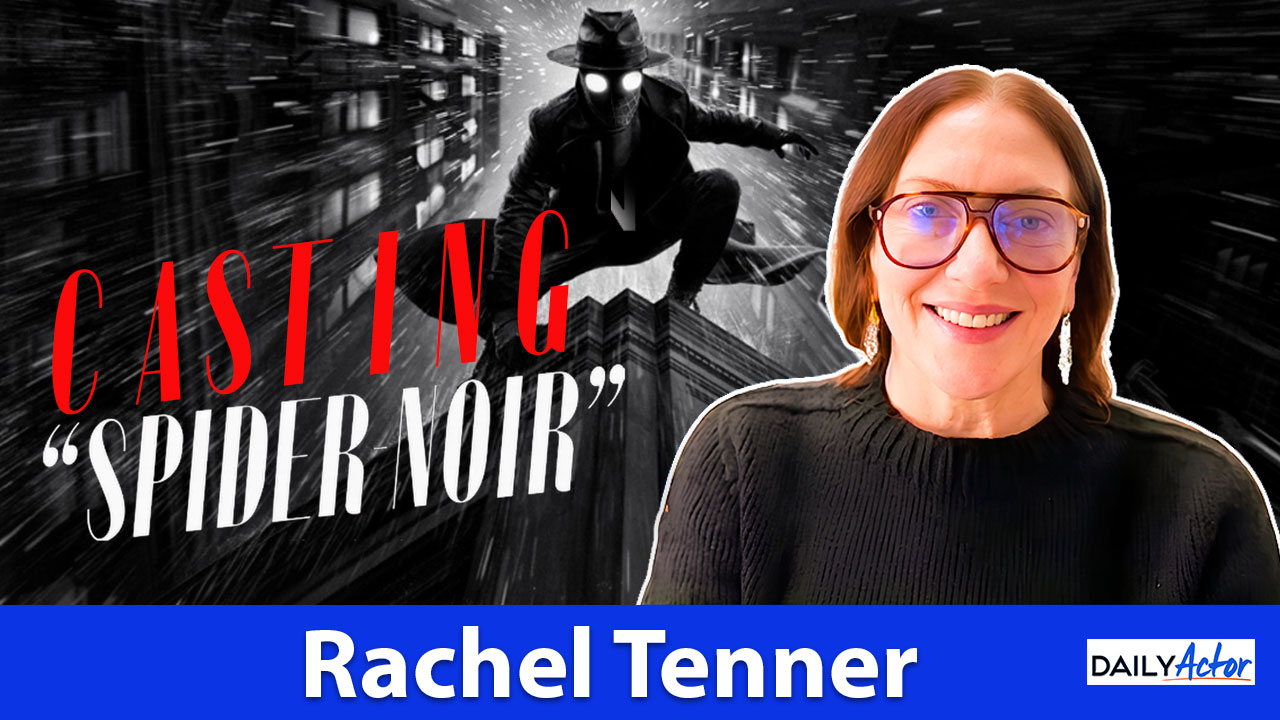
The combination of Nicolas Cage, Spider-Man and old-school noir is the kind of thing that sounds like it was created in a lab specifically to get people’s attention. And for Casting Director Rachel Tenner, Spider-Noir had one more major selling point: the chance to work on a project built around one of her bucket-list actors.
With Cage already attached to star, Tenner came onto the Prime Video series with a clear sense of the world the show was creating and the kinds of actors who could live inside it. The cast had to feel specific, grounded and unique, but never so big that they pulled focus from the story or the tone. That meant finding performers like Brendan Gleeson, Jack Huston and Karen Rodriguez, actors who could step into a heightened noir comic-book world and still make it feel real.
In this interview, Tenner talks about Spider-Noir, what made Rodriguez’s role one of the hardest to cast, how she thought about actors playing opposite Cage and what performers can do in self-tapes to make casting directors want to bring them back in. This interview has been edited for length and clarity. Watch the full conversation in the video below or on our YouTube channel.
This show, I ate it up. I’m a huge Spider-Man, Marvel fan and this was perfect casting all around.
Rachel Tenner: Yay!
How do you even get started on this? Was Nicolas Cage already in the mix?
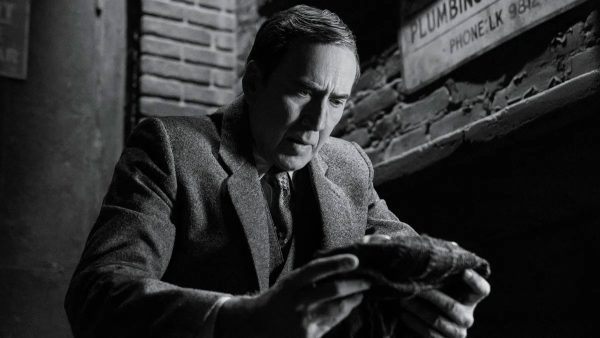
Rachel Tenner: Nicolas Cage was already in the mix, and that is why I was obsessed with trying to get this job. He is a bucket list actor I’ve always wanted to do a project with or just to have him in something. The combination of noir, and Nick Cage, and obviously Spider-Man, and then the showrunners, it was kind of an amazing combination of everything, so I really tried to get this one. I was really excited about it.
I don’t blame you. Were you interacting with him?
Rachel Tenner: Not at all. Got to meet him at the table read, and then at the premiere and stuff like that, but I got to at least tell him what a big fan I was. I was anything but cool. I tried to be cool, but then I wasn’t.
I’ve been there.
Rachel Tenner: Look, I think so much of this show is obviously about tone and the specificity of it, and this world they were creating. On the page it seemed very clear how to approach this and I think that for Steve and Oren, and Harry, who did the pilot, I felt like we were very in step with how we saw these characters and the kind of people we wanted to put in them.
It was daunting because it was a big cast, and you really wanted everyone to feel special and unique but really additive, not just for unique’s sake or something like that; obviously, that it would still fit in the world.
When I read the scripts in the beginning, before I even talked to them, I felt like I knew the point of view I wanted to come in with around this one. It was very on the page, and then it’s just a genre piece, so you know what it’s going to be like.
Is it easier to cast actors when they know that Nick Cage is the lead of the show, or was it supposed to be kept quiet?
Rachel Tenner: No, I think everybody knew. Hopefully it was a plus for everyone, I assume it was. If I was an actor, I’d be very excited about it. Also, this is an IP that is very famous and I think the noir element makes it very special and very unique, so I think those pieces altogether, I hope, were very attractive to the community. I felt like people wanted to participate. I didn’t feel like we were pulling teeth to try to get people to come on board or be involved.
At the end of the day, it doesn’t matter. Castings always difficult. It’s just never easy. The process is always very hard. Once in a while, something will go smoothly but generally, it’s a lot of work.
Speaking of the noir aspect of it, anybody who doesn’t watch this in black and white needs to have their head examined. It looked beautiful.
Rachel Tenner: I will say this, at the premiere, they showed one episode in black and white and one in color. You watch the black and white, and you think, oh, why would you even watch color? Then the color came on, and I was like, oh, that’s pretty nice, it was so rich and vibrant. I agree; the black and white has just got a mood to it that is so specific and really beautiful and successful, I think, but I did love seeing all the costumes in color, they’re really beautiful.
Now you’re making me want to go back and rewatch it in color.
Rachel Tenner: Yeah, I mean, it was just very striking. I was surprised how much I ended up liking it. I thought the costumes really were beautiful and really stood out in the color, even more so obviously, than the black and white.
Brendan Gleason, I will watch him, just like Nick Cage, in anything. Did he immediately pop into your head?
Rachel Tenner: Yeah, he was an early one. I think we even talked about him in my interview. We talked about ideas, and then we had a pre-meeting before we sat with the network about how we see these roles and prototypes and things that we’re trying to accomplish. I think he was like our prototype. He was just really in our brains from the beginning, so that was the first move we made.
Watching those two together, especially the last episode where they’re sitting together and going back and forth, it was like they were riffing off each other. It’s nuanced craziness. It was just so perfect.
Rachel Tenner: They’re both such fearless actors with no vanity. I think part of the fun of casting this show was imagining everybody, if they were in scenes with Nick Cage, how they were going to play off each other, and who was going to be able to meet his choices, which are always so interesting and so left of center. That was kind of a fun thing to think about.
I think someone like Brendan, who’s also just fearless and so good, and so nuanced, like you said, and layered, and threatening, and sweet, and everything, he was a great match with him.
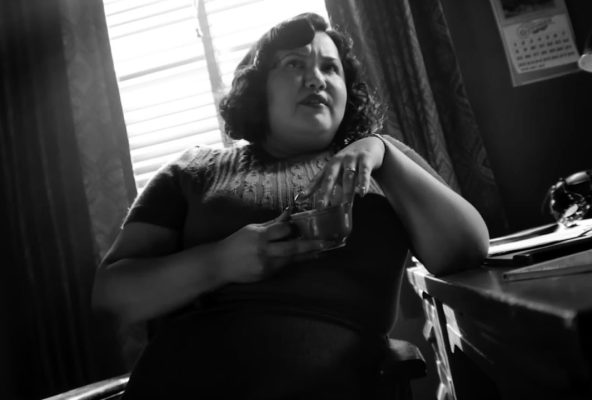
Karen Rodriguez as Janet, I’d never seen her before, but she embodied everything that you would think a secretary in that sort of noir genre would be, scrappy and sarcastic. And she totally gave it her own spin, and she was outstanding.
Rachel Tenner: Outstanding. That was absolutely the hardest role to cast, just because there were so many versions of what that could have been. I think for a minute, we were like, oh, it should be a His Girl Friday. Then we were just experimenting with different ages and different ethnicities. I did love her; we loved her from the beginning. We had her in our first group of people that we sent and flagged her. She was great.
We had to do a whole journey of really fleshing out the ideas about this character. I think we really wanted to ground her, but she just brought so much light to it and she’s funny. She’s also got this vulnerability and this heart to her that is so special.
It’s a complicated relationship because she stays with him and believes in him much longer than people would. Even though he was kind of a drunk, especially in the beginning and hadn’t paid her for a really long time, and she still stayed and believed. We wanted it to make it someone who was doing it because that was their choice to do it, like they wanted to do it. She was like, you are my equal; you are my partner. I think working in the workplace during the Depression in the ’30s, it wasn’t that way for women. Nick Cage’s character was just someone who was very forward-thinking that way and really celebrated a woman with power. There were a lot of elements that made a lot of sense when she came to it.
I saw an interview with Oren [Uziel], where he said that hundreds of people auditioned for the role, and she was the only one who got the character right.
Rachel Tenner: Yeah. absolutely. She really put her own spin on it and brought something that was very unique. This was really unique and that’s the process. You find that person that innately brings something. Obviously they make the choices, and then they innately bring it, and they just kind of stand out that way.
Had you ever cast her or brought her in before?
Rachel Tenner: Never. She’s out of Chicago. and she was very into the theater scene there, and I hadn’t seen her. It’s not that she hasn’t worked, she was doing a show already. I just didn’t know her. Then my old casting partner in Chicago, after I saw her tape, I called her, and I was like, who is this woman? She’s like, oh my god, she’s the best. We love her so much. That was exciting and it was a good extra plug.
I interviewed Jack Houston for the film he directed, Day of the Fight. He was the best. I don’t know what it is about him in period pieces, but he just fits into that era like a glove.
Rachel Tenner: Absolutely, I know. His look is so timeless.
He said he got fake sides for the audition. Were fake sides prominent? Did you give them to everybody?
Rachel Tenner: Oh, I bet we did. I can’t even remember anymore. Everything had to be kind of close to the chest on this one.
Was his character hard to cast?
Rachel Tenner: Yeah, absolutely. This was another one where, again, we saw hundreds of people. It was someone who was going to have the stoicism of that character who was quiet, and internal, and complicated, and strong but then also just had this side to him that was wounded and vulnerable. It was very hard to find. We really read so many people for it.
Obviously, as an actor, he can do all that, and then, again, like you were saying with his look, it’s so timeless. There’s always something fun with him. We were just talking about this at the premiere. He’s just from such an acting dynasty. His acting roots go all the way back, and so it’s kind of fun to see him in a period thing. He made it work.
The smaller characters that you filter throughout the show, like Michael Kostroff. I love character actors who’ve been around forever, and they’re still doing it. He’s great.
Rachel Tenner: Yeah, he’s great. I love Michael. When he did his audition, I was like, oh my god. I thought it was so good. He was great, and I was really excited to have Lucas Haas in it. I’ve just been a fan of his for his whole life. I just love everything about him. I love his acting, I love his face, I love everything.
I imagine most of these were self-tape auditions. What makes a self-tape stand out to you that you’re going to want to call somebody back in?
Rachel Tenner: I’m happy to have two takes if there’s something different that you’re showing in the second one.
A good audition doesn’t even have to be perfect. Our skill, collectively, as a casting community, is that we can see something there. If your choices might not be right, or this or that, we can tell if there’s a kernel there that we can explore more and guide in the right way.
Even yesterday, I watched a tape, I saw this guy, and I was like, he’s so good for this. It’s just not right where it needs to be. Then we met yesterday and did it a couple more times and got it on point and sent it off.
It doesn’t have to be perfect. It’s just that there’s something there that makes sense for us, for the character. We shot in LA, so we got to have callbacks in person and everything.
I miss the in-person auditions.
Rachel Tenner: I know. It’s interesting, I think some people have embraced this new version of it, and some people miss it, and I think there’s a good balance now. You can do a little bit of both.
I’ve done a couple of Zoom auditions before, and those are nice, because you still get that interaction without having to leave the house.
Rachel Tenner: Right, exactly.
How are you finding new talent nowadays?
Rachel Tenner: Now you can access everything. Obviously we do a breakdown, Actors’ Access. In Europe, we do Spotlight if it’s something specific. Let’s say it was an age group that was 18 to 22; you could reach out to universities, and you could go to Instagram. You can go to YouTube. There’s so many outlets for people. Obviously, agents do an amazing job also staying on top of everything and finding people and bringing them to our attention. Theater, there’s so much out there. It’s available to you just by clicking.
How can an actor who doesn’t have representation get in front of a big-time casting director like you?
Rachel Tenner: I appreciate you saying that I’m a big casting director. I’m going to first take my compliment.
I do think Actors’ Access is a good way for us to be able to find people. Obviously, you can just send in a headshot and resume, but there’s something about, when you’re prepping, to be able to be able to see people and be able to access them that way. I think just sending in stuff, you can send in if you have a reel, or your headshot and resume, people do it all the time. If there’s any content or stuff you want to send, there’s a link, that’s always helpful to kind of get a little bit more of a sense of who you are as an actor. If you’re doing theater, that’s always good to let us know.