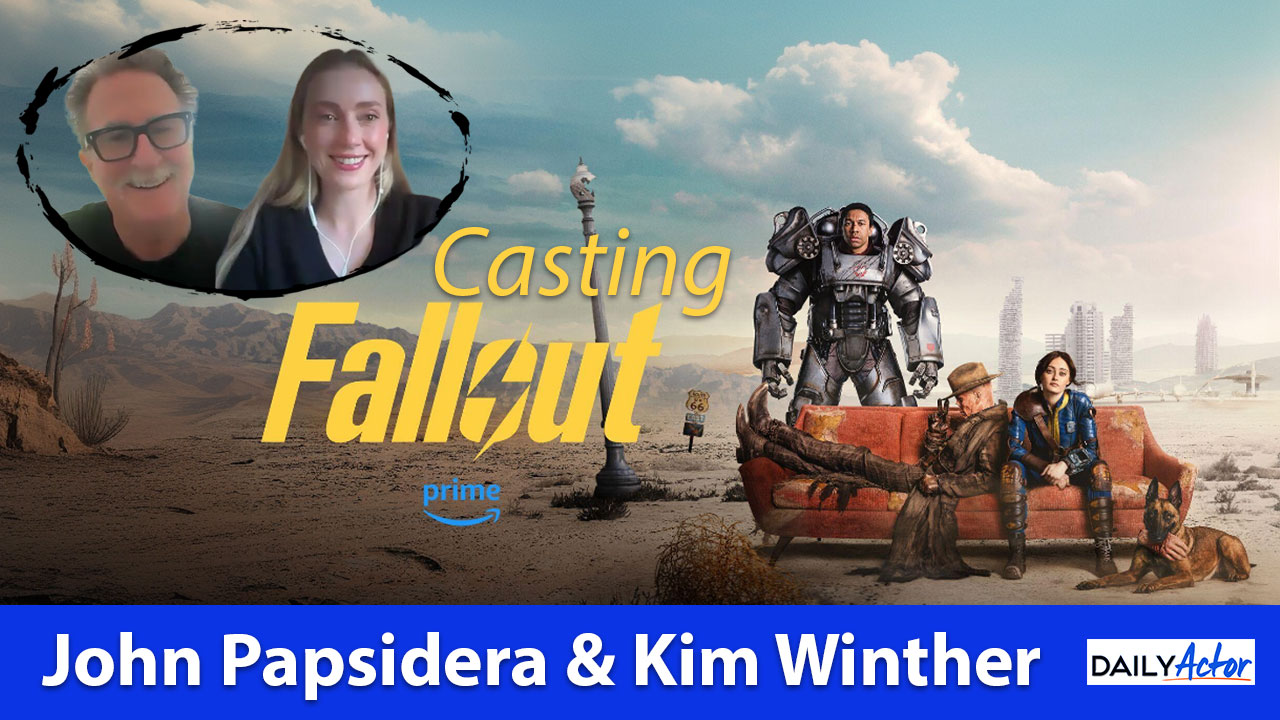
Casting a show like Fallout isn’t just about finding great actors, it’s about finding the right actors to bring an entirely new world to life. That’s exactly what casting directors John Papsidera and Kim Winther set out to do with Prime Video’s ambitious adaptation, and the result is a series filled with memorable, fully realized characters.
The series, based on the beloved video game franchise, follows survivors navigating a post-apocalyptic landscape after emerging from underground vaults, discovering a dangerous and often bizarre wasteland waiting for them above. With standout turns from Walton Goggins, Ella Purnell, and Aaron Moten, it’s a world that demands real range and that’s exactly what the casting delivers.
In our conversation, Papsidera and Winther discuss their approach to finding that balance, what stood out to them during auditions and self-tapes, and how they knew they had the right actors to bring Fallout to life. This interview has been edited for length and clarity. Watch the full conversation in the video below or on our YouTube channel.
You guys have worked with Jonathan Nolan several times. When he calls you guys up, are you automatic ‘yes’?
John Papsidera: No, no, no. I mean, my relationship with Chris, his brother, and Jonah goes back 30 years, so anything we can do to help them make the best things possible, we try and do.
Video game adaptions can sometimes be pretty tricky. Were you guys familiar with the game before you started?
Kim Winther: I had never heard of it, to be honest.
John Papsidera: I’m not a video game guy, so I’ve never watched it, I’ve never played it. I think some people would think that’s a disadvantage, but I think it allows us to bring a clean slate to the material, and think outside necessarily what just the game provides, which, in the series it’s been quite huge. The imagination of these characters, we don’t really have any limits to, so we’re trying to fulfill what they’re writing.
Are you guys getting images of the characters before you start casting?
Kim Winther: We’ll get scripts, sometimes we’ll just get character descriptions, and we’ll have a creative conversation about the character, and they’ll explain how they see it, and then we just take it from there.
When they do that, does your brain automatically go into casting mode?
John Papsidera: Yeah, it does, and then we’ll come up with initial ideas, and we’ll send them to the team, and they’ll come back and say, ‘these are our favorites, or more like this, or more like that.’ It’s an ongoing conversation.
In the Fallout world, we also start early. So, most of the time, they haven’t even written those scripts once we start talking about the characters.
I saw that they wanted Walton Goggins before you were even on board with the show?
John Papsidera: Walt wasn’t attached officially before we came on, it was all part of our early conversations with them. So, we identified Walt as somebody that we wanted to go after.
But we were in the process of reading girls for Ella Purnell’s role as well, so those kind of happened in tandem.
I saw that Ella Purnell thought her Zoom or self-tape audition didn’t go well at all.
Kim Winther: That’s so funny, because I feel like our reaction to her read… We did all of this on Zoom because everyone was scattered all over the world. We did callbacks, and then we did chem reads on Zoom with a few different guys and some girls, and I feel like she was such a standout from that process, so it’s funny to think that.
John Papsidera: Actors are the worst judge of their own performance.
Kim Winther: True.
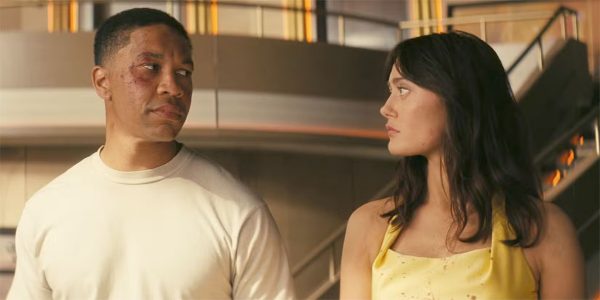
I feel like her character and Aaron Moten’s character, Maximus, might have been the hardest to cast.
John Papsidera: I think Aaron was harder than Ella. I mean, we quickly reduced it to a group of girls that we were talking about, in my memory. Aaron was a little bit more, only because it was a moving target, like Kim says. You know, they have an idea of what they want, but then that changes over time, and it also is informed by the people that we put around them. So, you know, I think it was a little bit more amorphic with Aaron’s role, as it was kind of coming to life as we were reading it.
Kim Winther: I think also as they were seeing auditions for his role, for Maximus specifically, I think they started seeing traits in the character that they maybe didn’t feel like fit the role and the story that they were trying to tell for him, and they wanted to bring forth other things that I think Aaron was giving. Like, a little bit more of the heart and the soul that Aaron brings to the character wasn’t necessarily who Maximus was on the page in the beginning. And he brings a little bit more of that vulnerability and that sort of underdog quality through the role, which is something that they then really recognized and loved.
When you say they did a chemistry test, do they know beforehand who they’re going to be acting with?
Kim Winther: I think we did mix and match, sort of, chemistry read sessions.
And also because in this day and age, everything leaks and is on the internet, and especially with Fallout, which is such a big IP, they really wanted to keep as much of it under wraps as they could. So, we couldn’t really share with one actor’s agent who the other actors were, because then that just increases the number of people that are in the know of who’s in the mix for this.
The show’s very kind of stylized, especially early on. Was it hard to find actors to fit into that world?
John Papsidera: I don’t think so. I think there’s a sense of fun about the casting. We try and keep that. I mean, it’s serious, it’s not fun for us, but there’s a sense of play that I think they have with the show, and they do want us fulfill the fan base in surprises and tricks and turns. But I think as far as actors are concerned, it allows them a little bit of freedom to kind of invent and create, because these characters tend to be on the fringe of what is in our normal world.
Speaking of fun, you guys cast a lot of comedic actors. Like Zach Cherry and Chris Parnell. I’d love to see those two in their own show, by the way. But I feel like comedic actors are more open to playing, especially something like this. Was that intentional, casting comedic actors?
John Papsidera: I think that’s where Geneva’s [Robertson-Dworet] and Jonah’s taste and tends to go to some degree.
Kim Winther: I think it also depends on which world within Fallout we’re talking about. Like, in the Brotherhood of Steel, it’s really Johnny Pemberton that is kind of the levity there but in the Vault, we have much more room for funnier people, because those characters are a little bit more…
John Papsidera: They’re highly stylized.
Kim Winther: They’re stylized, they’re a little bit more larger than life, and so they get to be a little quirkier, they get to be a little bit funnier, where casting a comedic actor can lend itself to some beats that might not even be on the page.
So, I think it just depends on which sort of partition within the world that we’re talking about, so we kind of cast towards which world we’re focused on.
I want to ask about Leslie Uggams, because anytime she shows up anywhere, no matter who she’s playing, she’s just so warm, you know? She’s just so lovely. How did you cast her?
Kim Winther: I know. I remember we worked on that, because that role was also kind of an evolving one, and it was just lists of ideas and talking to her team and talking to our team, going back and forth, and then they sort of identified Leslie as someone that they would love to get. And we were so lucky that she said yes, and now she schleps from New York and comes to LA to shoot the show.
Was there anyone who did a self-tape, and they just totally blew you away, but did something completely opposite of what you envisioned the character to be?
Kim Winther: Not necessarily anyone that sort of had a completely opposite take on the role, but we have had multiple instances where we’ve had someone read for something, and the producer’s said, ‘we loved their tape, but we actually think they’re better for this role.’ Like John Daly. He read for a different role, and they said, ‘we love him, but he should be something else.’
John Papsidera: And that was not even a role, that something else was not even something that what we were working on. So, you know, they hold the cards, and the secrets, so they move those chess pieces around a lot on us.
Kim Winther: And I think also what’s really cool about this team specifically is when they find an actor that they want in a role, sometimes that informs their writing and their take on that role. Snake Oil Salesman, I think, was supposed to be a small co-star-level role to begin with, and now, look, he’s grown into such an important character in our season. I think sometimes the casting really informs the character in their writing as well, which is fun.
If you guys see a self-tape and they look perfect for the part, but they’re not quite there, do you guys get back to them for a redirect?
John Papsidera: All the time. Yeah, we will give notes and go back, and Kim’s even had sessions with people to try and get a performance that’s closer to what we’re looking for. So, yeah, that’s just kind of standard with us.
In this world where everybody tapes these days, we at least want to try and help actors hone what they’re doing and how. If they’re in the ballpark, you know?
When somebody sends in a self-tape, do you mind if they send two different takes as long as they’re different?
Kim Winther: Nope.
John Papsidera: No, it’s, it’s fascinating that actors don’t.
I always tell actors that I think that they should always have an alternative take of a character in their back pocket, not necessarily to use and not necessarily on self-tapes… but, you know, the worst is when a director or a showrunner will say, ‘oh, can you do it again?’ And then an actor does the exact same thing.
I think there should be multiple ways of playing a scene that they have in their head to go to. It’s just a tool that I think a lot of actors don’t use.