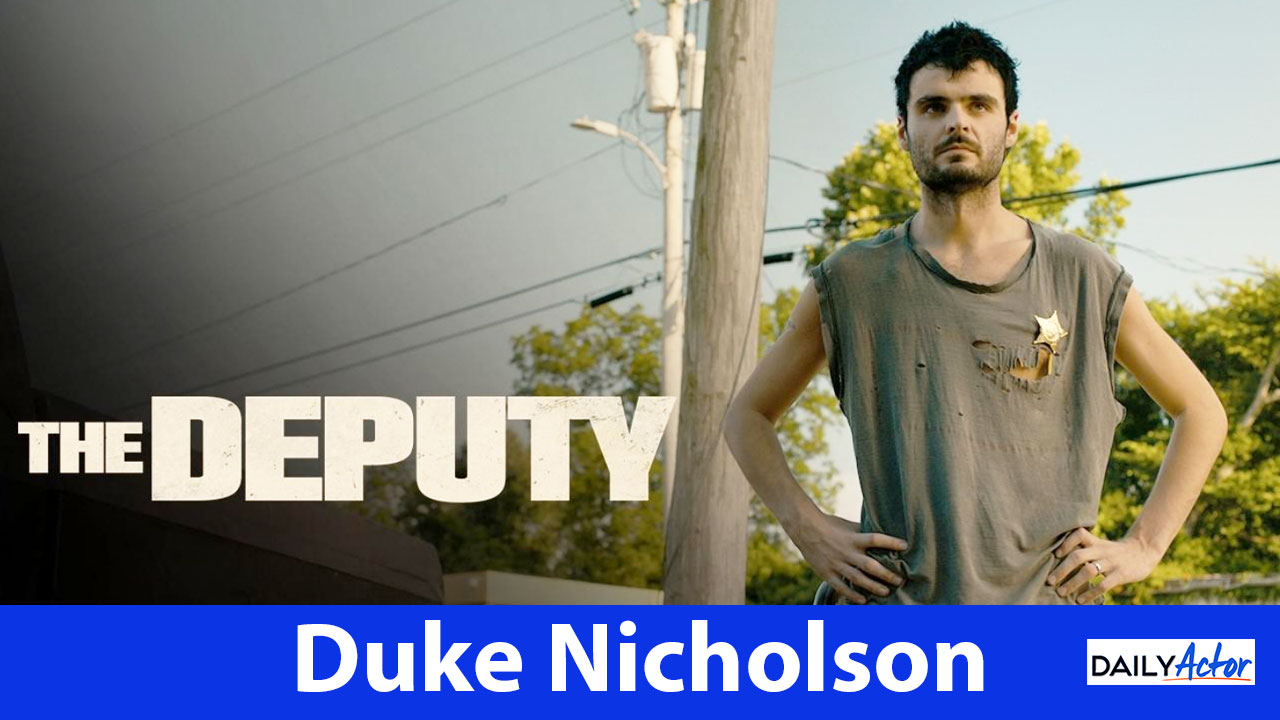
In The Deputy, part-time Deputy Toby Sawyer (Duke Nicholson) gets a pretty simple assignment from Chief Krueger (William H. Macy): guard a dead body until the coroner arrives. Then the body disappears. As he starts his search, Toby has to deal with his girlfriend, his wife, a brutal gang, and two deputies (Stephen Dorff and Tiffany Haddish) he may or may not be able to trust.
The film has a darkly funny, anything-can-happen feeling that reminded me of an early Coen brothers movie. As it turns out, Nicholson had their film Blood Simple in mind while preparing for the role.
Nicholson, who is Jack Nicholson’s grandson, talked with me about what it was like to lead a film for the first time, working with Macy, and why some of Toby’s simplest lines gave him the most trouble. And, of course, I had to ask if his grandfather has given him any acting advice. This interview has been edited for length and clarity. Watch the full conversation in the video below or on our YouTube channel.
I can’t say enough good things about this film. It kind of reminded me of an old-school Coen brothers movie.
Duke Nicholson: Nailed it. You know, Blood Simple, their first movie was like, one of the biggest inspirations for me, at least.
Did you actually watch that to prep for it?
Duke Nicholson: Yeah, I mean, early Coen brothers especially just kind of spoke to this film tonally, I think, with the comedy aspect of it mixed with the thriller aspect. I think Blood Simple is a great example of that. Raising Arizona, of course. So that’s kind of like the North Star for this movie.
It was like a comedy, but not intentional.
Duke Nicholson: Exactly. I think After Hours would be another one that we talked about a lot, especially because it takes place all in one night.
I love movies where twists and turns turn into other twists and turns.
Duke Nicholson: Exactly. The best.
I think in the hands of somebody else would be kind of like frustrating to watch because he’s so even keeled throughout the whole thing, you know?
Duke Nicholson: Yeah.
When you first started working on the part, what did you do to prepare? I know it was based on a book, were you able to read that?
Duke Nicholson: I did read the book. I read the script over and over and over again. I forget what actor—oh, I think it was Anthony Hopkins.
Right. He reads the script like 100 times or something?
Duke Nicholson: Yeah, yeah, yeah. So, having never led a film before, I kind of had to latch on to different things that I’ve heard and try it out. That was one thing. Because I think like, ultimately, the most important thing is confidence. And I think the way you gain confidence is just through working on the material a lot and not showing up not knowing what to do.
But in terms of the even keeled thing, I don’t know, I always just kind of thought that would be an interesting take on the character. I think him having this kind of like Zen like mentality through this is kind of how he copes. And I think that’s maybe just who he is as a person. He’s sort of not easily changed.
But it’s almost like, if I were in that situation, I want to be kind of like not going crazy.
Duke Nicholson: Yeah, yeah. I love films where someone very incapable becomes heroic, and I think that speaks to life in general.
Did that Anthony Hopkins script reading thing work for you?
Duke Nicholson: I mean, it’s hard to say whether it worked or not. But like I said, it definitely made me feel confident. I think just knowing the material… it’s so horrifying when you when you go to shoot something and you’re kind of reading the lines right before the scene, trying to remember, you know what I mean? So I think in that sense, it helped.
I was in a show a couple years ago, and I had one line, just one line. And I was walking to the set with the AD or whoever it was and my mind went blank, I completely forgot the line.
Duke Nicholson: It’s funny, I’ve only played smaller roles up until this. And when you come in for a day or two, you spend so much time obsessing over each line, how you’re going to deliver it and that kind of thing. And the fact that I was in every scene of this movie, you kind of stop analyzing so much and that state of like analysis, paralysis doesn’t happen as much, which is nice.
This is your first lead. I have to imagine that it’s a fantastic feeling, but also incredibly daunting, because you don’t want to screw anything up.
Duke Nicholson: Yeah, very. Yeah, very daunting, especially when I’m working with like William H. Macy, and that also ties into the Coen brother’s thing, too, obviously, because he works with them a bunch.
But yeah, just kind of doing a scene and having him look and look back at me was quite daunting.
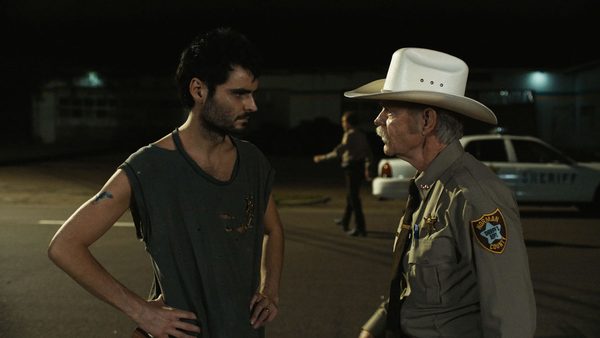
When you’re working with him, do you take notice of how he works and to try and figure out his process?
Duke Nicholson: Yeah, I think so. I mean, he was so Zen while shooting. He plays ukulele on set. I don’t know, he’s just always been one of my favorite actors. He reminds me of a 70s-character actor.
In terms of his process, you’re so in your own head, that it’s hard to kind of like, take notes, for me, at least, because I was in kind of like a constant state of like, ‘Am I doing this right?’
What was the one day or the one scene that you’re like, ‘Oh, crap, it’s coming up. It’s today.’
Duke Nicholson: You know, I would say the stuff that tripped me up the most is kind of the internal monologue that my character has with himself, when he’s talking to himself. You know, when he’s not in scenes with other people, the scenes of just me where I’m verbalizing my thoughts, to let the audience in on what I’m thinking. For some reason, I struggled with just even saying lines like, “Oh, gun,” or whatever. That stuff was really, really hard for me. And it sounds so simple.
I saw that the director, Matt Sukkar, was your old roommate?
Duke Nicholson: Yeah.
I’ve had a bunch of roommates and they were always scrubs. How did he come to you with the idea?
Duke Nicholson: Well, we kind of always had planned on making something together. He had been sent scripts that weren’t quite right and we tried to write a couple things. But his manager, I believe, sent him this script, he read it and then that day sent it to me. And we instantly decided that this is the thing that we wanted to make together. Took a while, but definitely paid off.
I’m sure you’re like a self tape master now. Do you have any tips or advice on what you do to make the best self tape possible?
Duke Nicholson: I would say don’t take it too seriously. It’s a big one. I think the more fun you’re having while doing a self tape, the better off you are.
I feel like casting directors, ultimately, they’re deciding within like the first 10 seconds of a self tape, whether they want you or not, so I think maybe if you make some really bold decisions, something might stick out. And if you don’t get cast for this role, maybe they’ll remember you for something in the future, which has happened for me a couple times.
So yeah, I would just say have fun.
And I have to ask you about your grandfather, Jack Nicholson. Has he ever given you any acting advice?.
Duke Nicholson: I mean, his biggest advice is to write. I think having the skill of knowing how to write is incredibly important and I think that’s sort of what’s helped him throughout his career, just having that in his back pocket. That’s his biggest piece of advice, for sure.