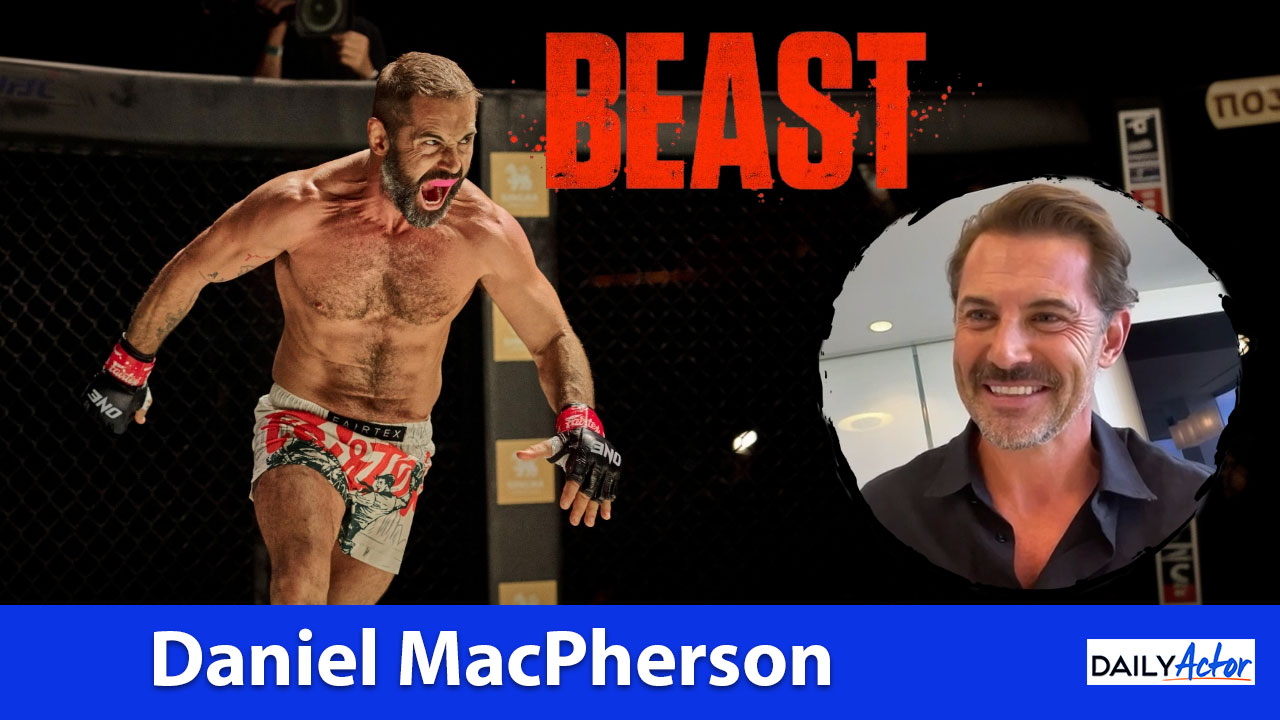
Australian actor Daniel MacPherson has been working steadily for years, but his new film Beast puts him front and center in a way we haven’t quite seen before. He plays Patton, a former MMA champion who’s built a life outside the cage, only to be pulled back in when his younger brother finds himself in serious trouble.
What starts as a reluctant return quickly turns into something much bigger, with Patton reconnecting with the trainer (Russell Crowe) who helped shape his career and agreeing to one last fight — this time against a dangerous, reigning champion who’s looking to dismantle everything Patton once was.
In our interview, MacPherson talks about the three-year journey it took to transform into a believable fighter, how fatherhood shaped his approach to the role, and what it was like working alongside Crowe for the third time. He also opens up about trusting himself more as an actor and why this performance pushed him further than anything he’s done before. This interview has been edited for length and clarity. Watch the full conversation in the video below or on our YouTube channel.
I’m about to tell you probably one of the best compliments that I can: I watched this with my wife, and she actually watched it. She’s not into these types of movies but after about 10 minutes, I saw her put her phone down and she was hooked.
Daniel MacPherson: Fantastic. You know, you put years of work into something like this, and particularly in Australia, you don’t know how it may translate here in the US in the biggest film market in the world, and so when we’re just starting to get little bits of feedback, like we are from you and from some of the press screenings, to hear that it’s hitting its mark, and that people are resonating with it is extraordinary, so thank you.
You were jacked in this. Were you that big when you got this part?
Daniel MacPherson: No, no, no, I worked really hard for it. One of the best compliments that I got early on in one of the early screenings was, how did you find a fighter and teach him how to act? I wasn’t a fighter and I certainly didn’t look like that when the script first came to me.
I worked on a film called Land of Bad, which we shot on the Gold Coast in Australia, with Liam Hemsworth, and Marla Ventimiglia, and Luke Hemsworth, and Russell Crowe and I got to work very intensely with him.
That was our second film together, we’d shot Poker Face in Sydney, just before that, which Russell directed. And the writer, Dave Ruggiero said, “Hey, man, I’ve got this other script that you guys would be perfect for and we’d like to maybe shoot it in Australia using the same sort of financing setup and the same tax incentives. Would you guys be interested in that?”
Originally, the story was set in Buffalo, New York and I didn’t know the first thing about working in a steel mill in Buffalo, New York and then when Tyler Atkins, the director came on, neither did he. But we knew a lot about what life was like on the east coast of Australia and we knew a lot about Australian fighters and Australian fighting history. And that was a story that we thought we could tell, so the story got transposed to Australia.
Way back in 2022, when it first came to me, I started training how to fight. I’d never trained before, I came from a sports background, but not from a fighting background. And so, when I say I started at the beginning, literally, the first thing I did was find a boxing coach. I said, “Hey, man, I need you to teach me how to punch.” And that’s where we started.
Then thankfully, it took us three years to finally get the scheduling and the finance and everything right. So, I ended up having three years of training for this role.
When your character is with his wife and daughter, he’s so sweet and kind and loving but man, when he can switch into that beast-mode in a heartbeat. Was there any sort of backstory that you created where he could just transform instantly because your transition was so smooth.
Daniel MacPherson: I think the deeper your love, the deeper your hate or anger or the deeper your ability to go to protect that love or whatever it may be. So, I the deeper that you can anchor a character, the deeper that you can bring of yourself to a character. There is a symbiosis, I believe, in those types of emotions.
I couldn’t play a beast when I first got this script. I wasn’t in the shape. I didn’t have the weight physically, emotionally and mentally that Patton needed.
And I probably couldn’t have played this role any earlier in my career. I was 42 when it came to me. Fatherhood played a big part in what I was able to bring to this role. I couldn’t have done it before I was a father.
So, the challenges of life, particularly around men and guys that I know in their late 30s, early 40s and that transitional phase in life, in a post-pandemic kind of world and uncertainty and the many pressures that the lockdowns and the pandemic sort of put on families and put on people around the world and some personal experience in my life, all of that stuff, I was able to link back to a man like Patton.
Maybe like a sportsman transitioning out of career in sport or like a combat veteran transitioning out of the military, you find yourself at some point with a loss of identity, a loss of purpose, a loss of direction and a loss of where you fit in your family structure and your life structure and in the world, that was something that I felt was very relatable to a lot of men my age around the world.
So, once I anchored in all the family stuff and this kind of greater thematic stuff that was really important to me, Patton was the guy that had the bravery and the boldness and the courage to go and really fight for what he believed in. And because he believed in it and loved it so much, I was able to take him to those ferocious kind of dark places.
You’ve even got a deeper voice in the film.
Daniel MacPherson: I’ve been acting for 27 years, but it was one of the first characters where, with the help of Russell and with the help of a bunch of theater and things like that, I was truly able just to let the camera and the audience come to me.
So often you don’t trust yourself that you’ve got to show something, I’ve got to push something, I’ve got to let them know what I’m feeling. And the bravery in this performance for me was trusting that whatever I was carrying into that character was enough.
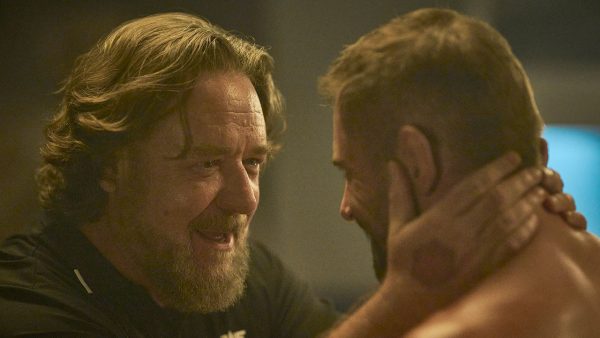
You mentioned you worked with Russell Crowe several times. What’s it like working with him? Do you guys go over the scene beforehand or do you just dive right in?
Daniel MacPherson: Well, the first time I worked with him, he was both my co-star and the director. And that was one of the most nerve-wracking moments of my life. The first scene of that film, and it’s a two-hander over the bar, and he’s behind the bar, he’s got two cameras on me straight away.
He’s like, ‘jump in and do your stuff’ and action and he was there cleaning glasses behind the bar.
And we did the first take, he was like, ‘Hey man, how did you feel?’ ‘I felt like everything was up here.’ And then, you know, obviously it dropped in as we needed to.
But look, he’s an extraordinary worker, he’s an extraordinary imagination, extraordinary work ethic. The second time we worked together was more like a spontaneous kind of masterclass where we’d go in every day, we’d work the day’s scenes, we’d rework the stuff on Land of Bad, we’d go in and block it. And we’d do that scene by scene over the course of the last two weeks of the shoot. So, there was a great flexibility and adaptability that was needed in that.
By the time we got to Beast, we were really playing. Russell was really supportive in just helping me understand some of the unwritten rules and unwritten things that you discover when you are the singular lead of a film and you’re carrying the story on your shoulders. He was able just to guide me and advise me through some of that early on when we were prepping, you know, what it takes to be an engaging, leading character and in that fight world and that warrior’s world as well.
He’s been a great mentor and a great supporter. And then to finally, step on a set and go toe to toe with him scene for scene, they’re some of the most rewarding and satisfying days on set of my life.
You’re staying in shape throughout the film. When they call it a wrap and everything is done, how fast did you go get a pizza?
Daniel MacPherson: The wheels had fallen off in the last week of the shoot. We shot a lot of the fishing trawler stuff, which was at the beginning of the movie, we shot that last and truth be told, there was McDonald’s everywhere.