
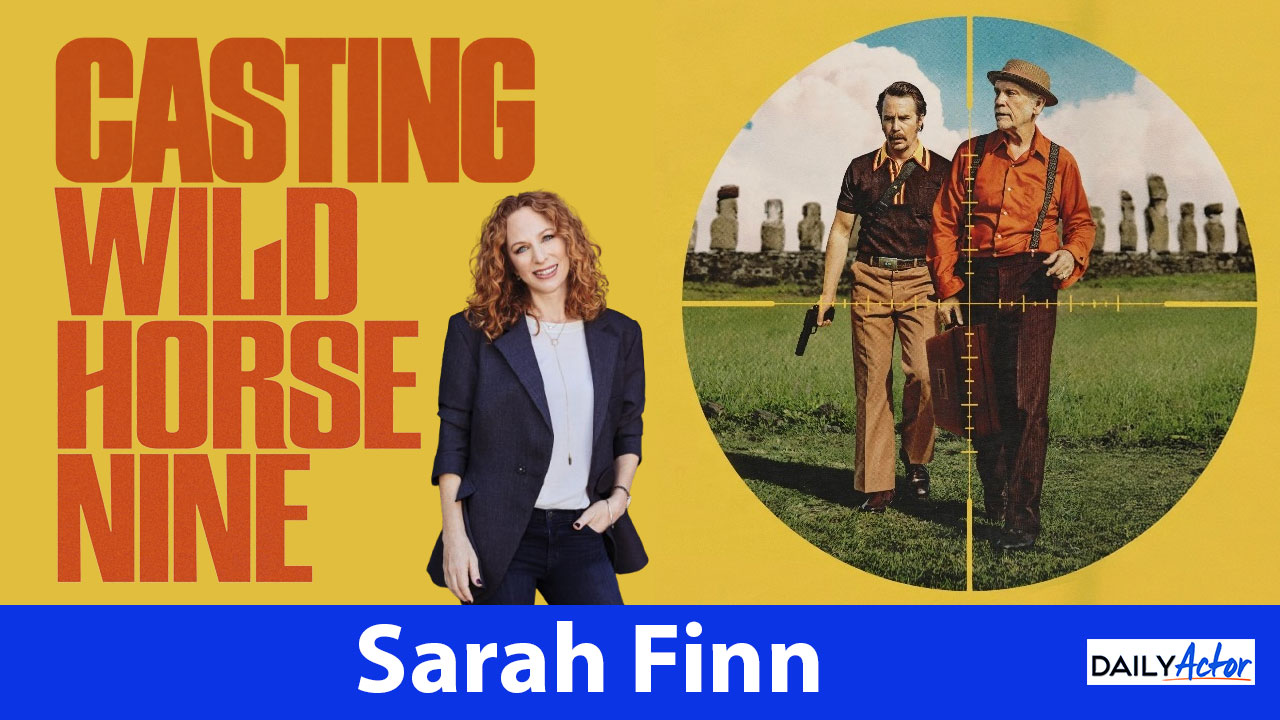
One of the things I love about Martin McDonagh’s movies is that he can have you laughing at a character one minute and feeling terrible for them the next. Wild Horse Nine, starring John Malkovich, Sam Rockwell and Steve Buscemi, does exactly that. And helping him find the actors who can pull that off is casting director Sarah Finn, who previously worked with McDonagh on Seven Psychopaths and Three Billboards Outside Ebbing, Missouri.
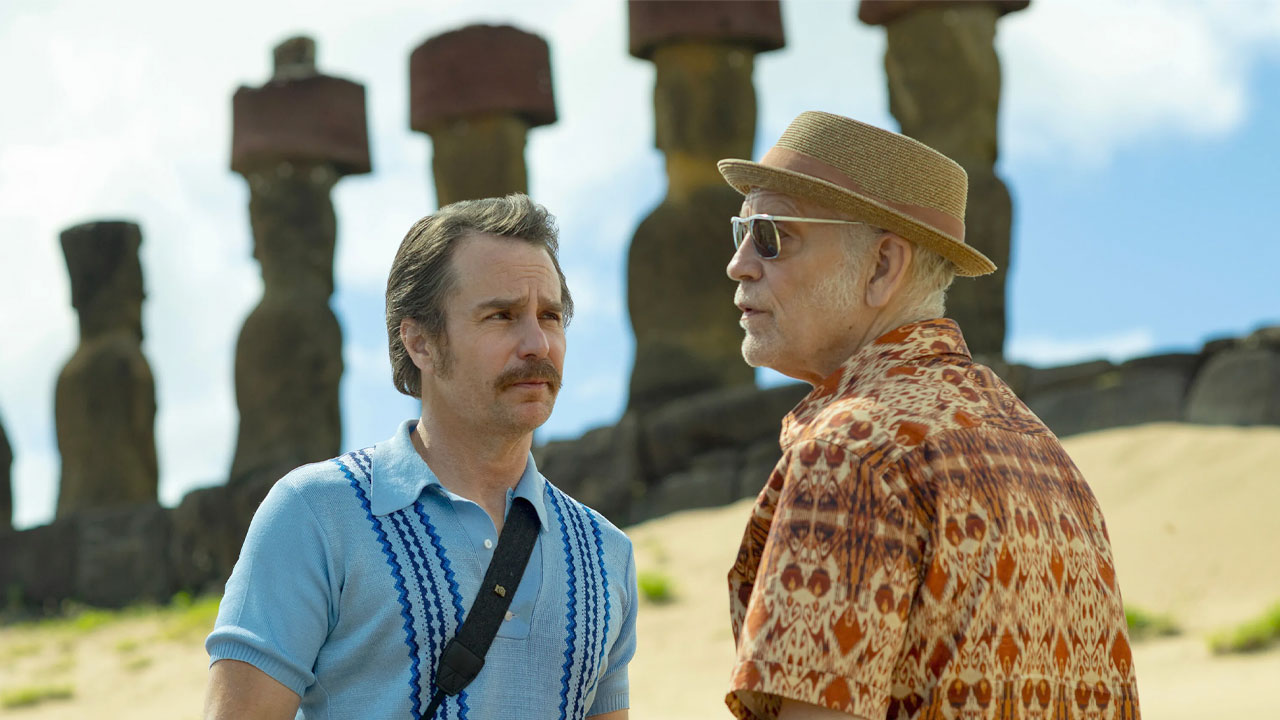
Set in 1973, the film follows CIA agents Chris (Malkovich) and Lee (Rockwell), whose boss, MJ (Buscemi), sends them to Easter Island. These guys have a lot of history, and even surrounded by all that beauty, it keeps catching up with them. Malkovich and Rockwell are so good together that I could have watched a whole movie of them just driving around and arguing. And that’s part of what makes Finn’s work here so good. She found actors who can handle McDonagh’s dialogue and make you care about these people, even when they’re giving you plenty of reasons to feel otherwise.
I talked with Finn about her partnership with McDonagh, finding that vulnerability in Malkovich’s character and bringing Buscemi into the ensemble. We also discussed Mariana di Girolamo’s audition and why Parker Posey flew all the way to Easter Island for scenes where we only hear her on the phone. Watch the full conversation in the video below or on our YouTube channel.
This is the third time you and Martin have worked together. How has that partnership evolved over the years?
Sarah Finn: It’s a gift. I think having that history together allows us to have a really high level of trust and a shorthand. I know Martin’s sensibility pretty well. I’ve seen all his movies, and I’ve read most of his plays, so I feel like I have a good handle on his language, his characters, and what he wants to achieve as a writer-director. He has a very specific sensibility to his work. So, I need to go out and find actors that are gonna match that sensibility.
But he also writes such incredibly complex, balanced characters, where each one has their arc. And they all share certain things in common, including a dark sense of humor.
We need actors who understand the comedic elements within the very human story. Within the action of the film and the unfolding events, there’s always that element where things can turn on a dime. You’re offended one moment, or you’re feeling the danger, and then you’re laughing out loud.
I think one of the actors you just described is Sam Rockwell.
Sarah Finn: Yes. And each of these actors show such tremendous range, but they also show their humanity and their own idiosyncrasies. They’re all very unique. They’re as unique and surprising as Martin’s writing is, and I think that makes for a very entertaining and, at times, emotional film.
Sam Rockwell was already on board for this. How did you land on John Malkovich?
Sarah Finn: We were talking about this role of Chris and what this character does in the course of the movie. What are the qualities? What is he dealing with? Of course, there are so many exceptional actors you could think of, but what was particularly intriguing about John Malkovich was knowing that he could be this kind of irascible, even off-putting person.
But as a human, where he is in his life, and with the mastery he has of his craft at this point in his career, he’s able to bring every color you can imagine.
That includes a vulnerability that I don’t think he’s as commonly associated with, and this kind of regret and atonement that we see from his character. I think he’s even bordering on contemplating grace by the end of the film
The challenge in that role was not only capturing the character perfectly but creating someone on screen that the audience might not like, but they still care for.
Yeah, I did find myself actually caring for him.
Sarah Finn: Yes, towards the end.
He’s done all these terrible things, but that is, I think, the towering achievement of Martin’s writing and directing and John’s performance. Despite all of your better instincts, you really feel for him. You really care for him.
I think that’s also one of the beautiful things Martin accomplishes in the film, this idea that there can be connection, even among the most unlikely of allies or friends. There’s the character of Monica (Mariana di Girolamo), who’s so idealistic and so pure of heart, and this CIA agent played by John Malkovich. If these two can form a connection, if they can actually help each other and in some way care for each other, anything’s possible.
I saw that Mark Ruffalo was originally cast in Steve Buscemi’s role. When something like that happens, how do you make that shift? Because I can’t imagine anybody else playing that role.
Sarah Finn: Well, hopefully that’s a good thing. When I feel like I’ve gotten it right is exactly when that happens, when it just seems like nobody else can play it. There are always things that happen in the course of this. I mean, I started this film two and a half years ago. Scheduling conflicts can arise, or things come up, and it’s always hard to make a change.
And yet when that happens, it allows you to kind of shake everything out and reconceive it. You can see how the cast is coming together, what you need, and even reconceive what the character is in the context of the ensemble that’s forming.
At that point, we had elements already set in the cast, and we could really talk about what’s exactly the right age for the character, what’s exactly the right history. And again, we knew we wanted an actor who’s capable of making us laugh and feel all kinds of things and, frankly, surprise us. Who’s gonna fit the bill perfectly? Steve instantly became a very clear idea, somebody we were very, very excited about. We were so thrilled to have him.
He’s an actor with so much mastery of his craft. He’s been around doing great work for decades. As with many of this cast, they’re such journeymen actors, they’re so beloved and relatable, that you forget they’ve been movie stars for so long. But they’re character actors! And they’re really there for each other.
That was another thing that was so important, matching each actor to the role and Martin’s sensibility, but also to one another. We were finding actors whose work ethic, whose approach, whose level of commitment was gonna match. And they all brought that every day. They were rehearsing on weekends, on their time off, just because they loved working together. They loved connecting, they loved trying things out, and I think Martin inspires that in the actors he works with.
Parker Posey is basically on the phone with Sam the whole time and its scenery chewing at its finest. She brings such a totally different energy to all of her scenes. How did she come on board?
Sarah Finn: Let’s talk about Parker’s range, because she makes us laugh, and then she has that moment where she just turns and says, “Poor Chris and poor Lee,” and it’s heartbreaking. Or those moments of real fear when she’s on the phone.
I think her relationship with Sam was so interesting to watch. How those two characters express their love for one another isn’t necessarily the norm. But you can tell there’s history, there’s needs, there’s connection.
And talking about the way the actors approach their work, it wasn’t just a phone conversation. In this day and age with technology, there are a lot of ways to make movie magic. No, she flew to Easter Island to read the lines on the phone, off-camera with Sam.
I think that’s why you feel so much and understand so much about the relationship. In just a few short scenes, we needed to say a lot about the story and the events that are unfolding, the danger and the urgency of the situation, but also her history with Lee, her history with Chris, and what this moment represented.
I read that Mariana Di Girolamo did a self-tape, and then you brought her back to read for both you and Martin. What was it about that self-tape that made you want to call her back?
Sarah Finn: I’d been a fan of Mariana since Ema. That was her breakthrough film, and I’d met her back in 2019. I knew she hadn’t done an English-language film. This is her very first English-language film. So I knew her work a bit, and I was excited to see what she’d do with it, but Martin’s language is so specific, and it’s so demanding of its actors.
It was really fine-tuning. She had the instincts and the talent from the get-go, but it was working with her to bring everything into the words and the scenes that she was able to bring.
Was there a moment when an actor came in or did a self-tape and made you and Martin see a character differently?
Sarah Finn: I would go back to Mariana again. For that character, I certainly wanted a Chilean actress to bring an authentic feel to the story and really properly represent the history. It was central to the story we were telling.
But I also knew we needed somebody with heart. Actors can have a lot of technique and a lot of skill, but the actors that really show up with their humanity, that adds a whole other level to the film and another dimension. And right from the beginning, she did.
And yet we still needed to see the turn. We needed to believe that this character is capable of doing the things she does by the end of the film. It really is a very demanding role. I think she’s just a revelation in the film, to do this in a different language, hold the screen with John Malkovich and all these legends, and also be the beating heart of the film and take us on this journey. It was so exciting to see how she brings this character to life.
You’ve cast so many great films and TV shows, and some of my favorite ones, too. Do you have one that’s your favorite, or are they kind of like children, where you just can’t pick one?
Sarah Finn: Yeah, it’s very hard. They’ve all been special. Getting to work with Martin on first Seven Psychopaths and then Three Billboards Outside Ebbing, Missouri, with Frances McDormand and that whole cast, was also a dream. Each casting process for me has been its own full journey. I’m really grateful for all of them.
This interview has been edited for length and clarity.


