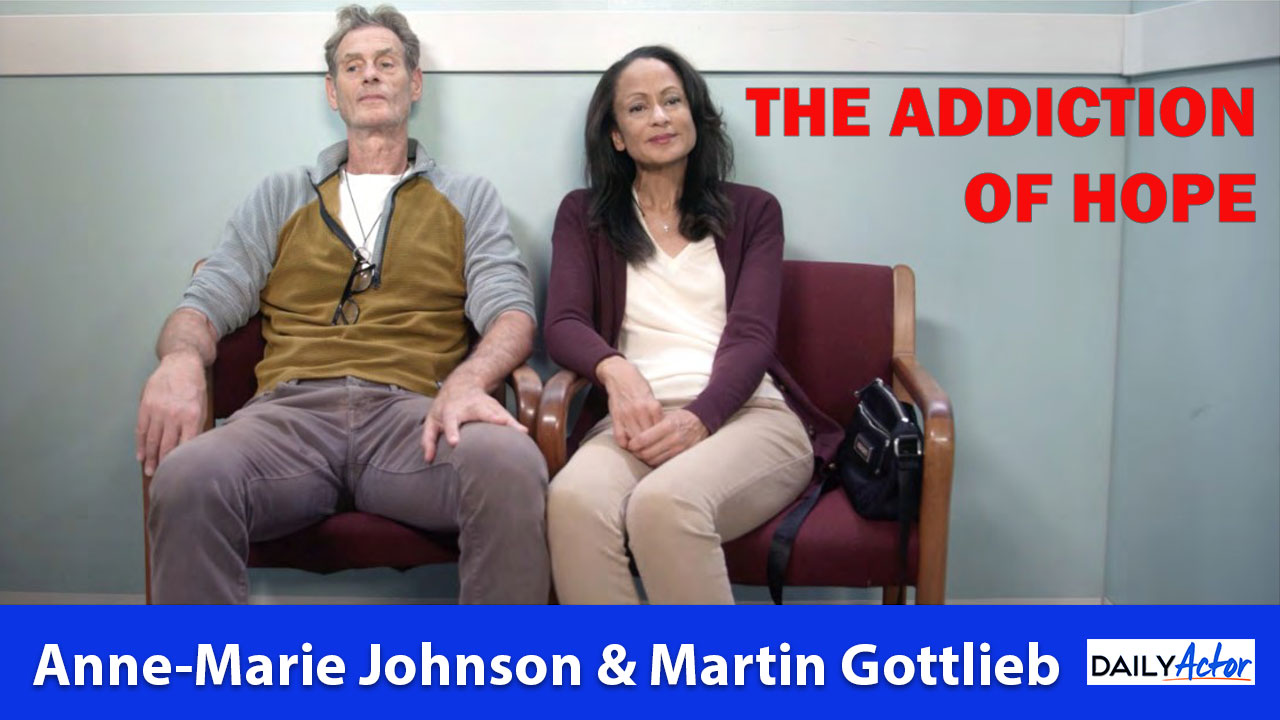
Actors Anne-Marie Johnson and Martin Gottlieb don’t shy away from the realities of the business in their new film, The Addiction of Hope. Inspired by their own experiences and conversations with other actors, the film takes an unflinching look at what it means to age in an industry that often feels like it’s moving on without you, especially for women.
Here, Johnson and Gottlieb, who also wrote and directed the film, talk about working together as a married couple, why authenticity was at the core of every decision they made and the current state of the industry, from dwindling opportunities to shrinking residuals, and how those realities shaped both the story and Johnson’s powerful performance. This interview has been edited for length and clarity. Watch the full conversation in the video below or on our YouTube channel.
How did this film come about? Martin, was this story your original idea?
Martin Gottlieb: There are a couple things that went into it. It started out because I was feeling, as an actor, I was feeling some of these things, and I talked to friends, and then I talked to Anne-Marie, and people of a certain age.
We’re getting pushed out. If you don’t look a certain way, the business says, we’re done with you, let’s bring in the next crop. And that happens across all industries and businesses. The more we talked about it, the more it seemed like it was worth exploring as a story.
And then, frankly, with so many stories about white guys complaining, it seemed like, really, a perfect opportunity to explore this and layer it from the point of view of a woman of a certain age, and a woman of color in particular.
Anne-Marie was the idea that you would star in it?
Anne-Marie Johnson: It was. I was so thrilled to have this opportunity, and more so that more thrilled that Marty would trust me and have faith that I could deliver the story that he intended.
I’ve said this over and over, and I’ll continue to say it, it really was the best working experience I’ve ever had, and it’s the best work I’ve ever done because I trusted him. It’s a raw presentation of a woman who’s at the crossroads. And there was no faking it, I couldn’t pull any tricks out of my actor’s bag because Martin would call me on it, right?
So, we had extensive conversations prior to principal photography to make sure that we were on the same page and Marty as the screenwriter, Marty as the director, he knew exactly what tone was going to be set and I just relinquished ego. Because we’re all very egotistical, because you have to be in this business, right?
I’m accustomed to pretty roles; hair, makeup, wardrobe, lighting, the most complimentary lighting you can have. You can’t have that with a movie like this, because this is a reflection of, real life, of the struggles for women of a particular age, and it had to be raw and honest. That was really difficult for me and for any actress, because you kind of hold on to those safety blankets of hair, makeup, and great lighting, and this was intentionally natural. And it scared me, but I trusted Marty, and it worked.
About a year or two ago, my wife and I tried to put together an IKEA dresser and it was terrible. We both got so mad at each other. How was it working together on this?
Anne-Marie Johnson: We both knew our lanes. I can’t speak for Marty, but he was my director, and he was the screenwriter. We were producers, so we understood that collaborative work process. I was responsible for certain things, he was responsible for other things, and I can definitely say it was virtually flawless.
Martin Gottlieb: I can say it was probably easier than putting together an IKEA cabinet, because we’ve all been there and ended up with one spirit too many and that stupid curly wrench.
I was just so grateful. The experience was the best. Every actor, every person, checked their ego at the door in service the project and that’s hard to do but we did it because we had such a small footprint as a production.
A lot of things in this film really resonated with me, like that scene with Erika Alexander. She comes in that audition room and she says, “Real Estate is my business now. Acting is my hobby,” then tries to see if you want to sell your house. I know people who have that same feeling now, some admit it and some don’t. Was that conversation taken from a real-life experience?
Anne-Marie Johnson: I used to be the vice president of the Screen Actors Guild, and so, I saw the trajectory, or lack thereof, of opportunities for the overwhelming majority of actors. And I… I just recently retired from being on the board of SAG-AFTRA, and you see the incredible decline in work opportunities across the board. More for women, but definitely across the board. More lack of work, lack of opportunities for women. And so, our employers have turned us into hobbyists, and I’m sure we all, ourselves, your friends who chose to be union actors, have become hobbyists.
Martin Gottlieb: You know, as a writer, you hear everything, and, if you’re lucky enough, you remember a lot of it. I’ve had experiences out there with people who’ve told me that now they have a real job. We always hear that. And, as if going around auditioning all the time, where you are opening up your heart and going, ‘this is what I’m selling today are you buying?’ They look at it now as, yeah, ‘my real business is that, because that’s where I make the money, and acting might be my passion, but it’s a hobby now.’
Anne-Marie Johnson: You cannot make a middle-class living any longer as an actor, because our employers have figured out a way to almost get our work for free. And the union is struggling to try to keep minimums protected, but when our residual checks have been reduced to 5 cents, 10 cents… I’ve gotten notifications where I owed for residuals.
I’ve gotten one for a penny a couple of times.
Anne-Marie Johnson: Oh, yeah, that’s more common. We used to laugh about it, maybe, 5 years ago, now it’s more common than anyone had ever dreamed or feared.
So there is absolutely no way for 99% of our union members to make a middle-class living. You have to have another job to survive. It doesn’t matter what city you’re in, it’s not just New York or Los Angeles that’s expensive to live. It’s across the board.
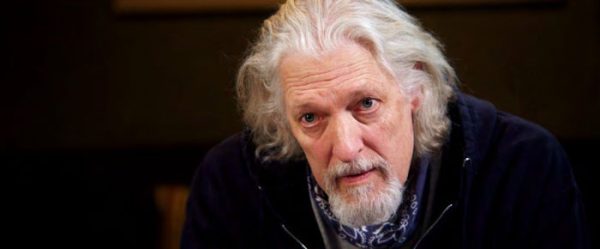
Another scene was the between you and Clancy Brown, who plays the director in the audition.
Anne-Marie Johnson: Been there, haven’t you?
Oh, yeah. Martin, your decision to keep the camera on Anne-Marie’s face during a lot of that scene and we’re watching her go through what feels like every emotion in the book, it was just the greatest.
Martin Gottlieb: Well, thanks. Behind the camera, it was great to see all of that going on in Anne-Marie’s face, those thoughts of am I here to work? Do I want to work? Do I want to be doing this? Every actor knows that scene.
Anne-Marie Johnson: And Clancy’s so good in that. I’ve known him for years. We were on the board for years together, but we’d never worked together. He really gets into the role.
And it was all so wonderful the way Marty held it, it’s very still. It allows the characters to really unfold in front of you, and it was the opportunity for the viewer to see Joe’s thought process. To see, ‘okay, What now?’
Did you map out those separate thoughts before you did the scene?
Anne-Marie Johnson: I mean, I’ve had auditions where the casting director made dinner reservations while I was auditioning, so, we can bring that stuff up in real time. But the scene was so well crafted, and Clancy and Beth Holmes, who plays the casting director, all of it was there to bring that out of me.
Speaking of auditions, what’s been your worst?
Anne-Marie Johnson: Oh, God! I’ve never been asked that! I’ll start with the less worse.
It was a series that actually went to air about outer space and I loathe science fiction. Loathe, to the core, science fiction. But I had done a really kind of quirky sci-fi film that was kind of popular, I don’t even remember it.
But the dialogue was the worst Shakespearean… it’s just bad Shakespeare, left and right. I could not remember the lines to save my life, right? And I’m flop-sweating now and finally, I looked at the casting director, and I told her, I just can’t do this. This is so bad, I cannot do this. And she was so offended. She was so offended that she kind of said, ‘well, then you won’t be in my office again.’
Martin Gottlieb: A big deal casting director, I remember.
Anne-Marie Johnson: Yeah, big deal, we won’t mention them. ‘We’re just not going to have you back in our office ever again.’ And I said, ‘well, that’s the price I have to pay.’ And I got up and I left.
I felt like throwing up, because it was so embarrassing, but I was so relieved that I was honest! I said, ‘this is crap, I can’t do this! Find someone else.’
The second one I can mention. There was a medical show called, City of Angels, and I think it starred, maybe Blair Underwood or something, but it was a [Steven] Bochco show, and I’d worked for him several times, so I was really excited about it. I prepped for it, and I was good to go.
I had to do a chemistry meet with the male lead, and so we’re auditioning and Bochco’s in the room. And he just said, “You know, I just don’t think this chemistry is working. I don’t know if the African American audience is going to relate with you, because you can pronounce stethoscope so clearly.”
She was supposed to be the director of the hospital! I think the message was that I was sounding too Caucasian.
Martin Gottlieb: Can’t beat that. that’s crazy.
I do remember an audition with, it was for a John Wells show and, John Levey’s cast all of John’s shows. I had worked with John Wells a few times, and so I kind of knew the players, and I went in, and made this choice that was, intentionally large, and It’s just one of those moments where the earth stops moving. When I was done, it was so silent, I checked the clocks to see if time had moved. And it was really terrible.
When I saw the show air, it was 180 degrees from where I was with my choice, And that always kills me, because it’s one of those things where you go, ‘I’m making a choice, because I don’t have anybody directing me.’ As an actor, you go in and you make a choice and it was so silent. It was pretty tough.
Anne-Marie Johnson: It’s so unfair, because you’re never not directed on the set, right? So, why do they not direct us in the audition! It’s kind of like they give you that ridiculous breakdown about who the character is, and blah blah blah blah, but direct us! They set us up to fail.
Martin Gottlieb: I think one of the things that I was happiest about for Anne-Marie in this case, is that so often, you’re brought into a room and you’re asked to play a role, whether it’s you’re the laying the pipe character, or you’re moving the story forward, or if it’s a sitcom or a comedy, you’re spinning the joke, whatever it may be, and this is really not a slight, it’s just my opinion, but so often there’s a lack of authenticity in the character. And the thing that I was most proud of in this film was the complete authenticity of all of these actors. Nothing felt like a false moment, it almost felt like we were eavesdropping on these lives, especially Anne Marie’s character.
I think it’s the first time that she’s been given the opportunity to not move the story forward, not to be the wife, or be the judge, or the senator, or spin the joke. It was an opportunity to be in character, as Joe, and given the opportunity, well, you saw what she did.