Edward Norton, Tim Blake Nelson on their film, “Leaves Of Grass”

October 13, 2010 by  
Filed under Interviews

Play

Edward Norton playing twins in a movie that’s directed by Tim Blake Nelson? How could that not be great?

And guess what? Leaves Of Grass is great! Edward Norton plays twins Brady and Bill. Brady is a small-time pot grower and Bill is an Ivy league professor. Tim Blake Nelson who also wrote the film plays Brady’s redneck friend Bolger.

I saw the premiere at SXSW and the movie is funny, violent and at times, you have no idea where the story is going to take you, which for me, makes the film.

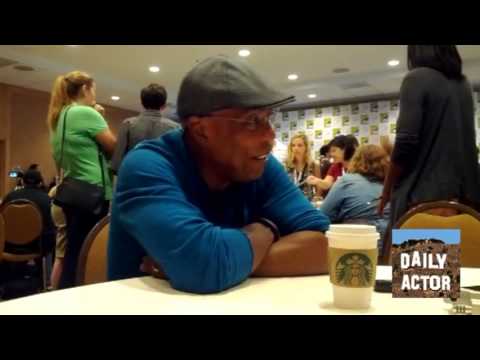
This was another roundtable interview (my question is here) and the interview ran longer than most, so I’ve cut it down a bit. If you want the whole interview, you can listen/download the whole conversation above or click here for iTunes.

On a side note: I’ve been interviewing people for a while now and I have to say, Tim Blake Nelson is truly one of the nicest guys around. The day after this interview, I was in the hotel lobby when Tim and I saw each other. He said, “Hi” and we started to have this 5 minute long conversation. It wasn’t anything about his movie… just a normal conversation… about BBQ. You gotta love SXSW.

Tim, I was wondering as actor and as a filmmaker do you involve yourself with films that act as a corrective and not go straight towards the stereotypical easy laugh?

Tim Blake Nelson: Yeah, I certainly do.  I do grow tired of intelligence having such a limited manifestation in movies.  And so when I wrote this I knew immediately that the wisest and smartest characters, two characters in the movie in this movie would be the ones who either remained in Oklahoma or returned there.  So, the smartest guy in the movie is Brady.  I think that’s evident and it’s also stated by the mother.  And the wisest character is Keri Russell’s character, and she’s chosen to return and write in Oklahoma, and I think she gives the Bill character the wisdom that allows him to begin to move forward in his life as it’s collapsing around him.  So, in answer to your question, I was eager to debunk certain stereotypes about Southern characters in this movie.

This question is for both of you and it has to do with that obviously to believe in the duality of it you have to have this suspension of disbelief, and I’d like to hear from you how you achieved it through filmmaking and how you achieved it through your acting.

Tim: Yeah, suspension of disbelief in a story like this is pretty essential, although that said, I think you have to be responsible to your story as a storyteller.  To make it feasible enough, and I hope that this story is feasible enough.  There are details peppered throughout that I didn’t want to bang the audience over the head with it.  I mean, an obvious question would be well, hang on, wouldn’t folks know they were twins, but they didn’t grow up in Ida Belle, in the Ida Belle, Broken Bow area.  They grew up in another town, Hugo.  And Brady is moved to Ida Belle.  But these stories are all far-fetched, but the antecedent material for the movie, like in Menander and Plautus and Shakespeare, you know, it’s a retelling of a twins genre.  And the main character in the movie is a classicist, and so that’s all very intentional.  It’s meant to reflect on those earlier works.  The character, Bill, has done a translation of Plautus’ play The Menaechmi, which is a Roman twins play.  And so suspension of disbelief and that whole question is part of the fun of the movie.  Alright and now he’s going got say thanks for referencing Menander (laughter).

Edward Norton:  Well, no, actually I was going to say that any questions I had about whether a redneck from Oklahoma could actually go and become a Brown classical philosophy professor were ended when I met Tim because I think as you can see one conversation with Tim and you kind of realize, ‘Oh, Bill is a believable character.’

Read more

Independent Producer/Director Zak Forsman’s advice to actors

December 21, 2009 by  
Filed under Columns

Zak-ForsmanThis post is one of three in a series of posts from the San Diego Film Festival. If you ever get a chance you really should go. Great films, great people and incredible access to filmmakers.

The festival is in — and I would have posted these sooner but I had some major audio issues and transcribing the panels were difficult.

Zak Forsman is a writer, director and producer of independent films. His films are mostly improvised which makes all of the performances look completely real.

Take a couple minutes to read what he said on the panel. It’s a peek on what the other side is thinking… and if you look at it from an actors perspective, it can be excellent advice.

Zak Forsman:
How many filmmakers are in the audience?  Because that’s about all I can share.  I can’t really share the actor’s point of view on this.  But I can tell you some lessons I’ve learned and some of the experiences that I’ve had and what I’m hoping for.

The key thing that I’m looking for with an actor is whether they’re able to internalize direction and actually make a change.

So, we provide them with 2-3 pages of sides.  They’ll come in.  They’re asked to read it however they’ve prepared it, and if that goes well enough and we like them, I’ll give them an adjustment that could be ridiculous.  It could be off the wall.  But I would like to see them chase a different objective using the same words to see if they can truly internalize my direction and be authentic.

Read more

Harold Ramis on directing actors

June 17, 2009 by  
Filed under Performing Arts News

http://graphics8.nytimes.com/images/section/movies/filmography/4/WireImage_4067496.jpgHarold Ramis has had an interesting career. First appearing on SCTV (watch the DVD’s if you’ve never seen it) then moving on to directing (Caddyshack, Vacation, Groundhog Day) and acting (Ghostbusters, Stripes, Baby Boom, As Good As It Gets).

His new film is Year One (starring Jack Black and Michael Cera).

He gives an interesting perspective on how to direct and work with actors.

From Movieline:
Year One features a newer generation of talent than that which you’ve generally worked with. How do today’s newer batch of comic stars match up with guys like Bill Murray, Billy Crystal and others with whom you’ve made hits?
They’re great. And Jack’s been around. From the first time I saw him in High Fidelity, he was so good and so convincing that I wasn’t even sure he was a real actor. I thought, “Who is this guy? And how can he be so funny and seem so convinced himself?” And then to hear him play his music at the end of the movie? “Wow, he can sing and play?” Like everyone else in the entertainment word, I started tracking him and was just amazed at how winning he is and how much fun he is to watch. And now he’s done more movies than I have. And Michael, I started noticing him on Arrested Development — he came to that show when he was 13 years old. And I thought, “This kid has a seamless acting style. He’s totally convincing; he’s a total natural. And also funny.” He’s like a grown-up in a teenager’s body.

But when you work with your contemporaries, you tend know their sensibilities and what they’re good at. When you have actors like this, do you find yourself adapting more to their style, or the opposite, or both?
Well, they have this kind of thing where my movies to them were legendary in some way. And I don’t say that in a grandiose way; everyone kind of cherishes the media of their youth. So these guys have this reverence toward those early films, but in the end I’m a person, and they’re people, and their reverence would evaporate really quickly if we were doing a crappy job while we were shooting. So my take is that, as a director, I just have to remember that every actor speaks a different language. It depends on their training, their intellect, their psychology. So many actors are just not introspective. There’s no point in talking to them in a deeply psychological way. Others are completely introspective and require a lot of psychology. Others are completely mechanical; I’ve had some actors say to me, “I only need four directions: Bigger, smaller, faster, slower.” And that’s all they want to hear. Others are very political, and they want to talk about the sociology and the politics of the film and their role in it, or what it represents. I have to be able to speak in all of those modes, and that’s true of any generation.

Send Your Stuff! Pilot "Ace In The Hole"

March 6, 2009 by  
Filed under Performing Arts News

send-your-stuffAce In The Hole is a 1/2 hour multi-cam pilot for CBS.

This pilot stars Adam Carolla.

Synopsis: Ace is a driving instructor & frustrated inventor with a complaint or opinion for everything. He has particular venom for his good-for-nothing stepson who no job and no future.

Casting Director: Marisa Ross / Alyson Silverberg
Casting Associate: Elizabeth Campbell
Casting Assistant: Jessica Ross

ROSS/SILVERBERG CASTING
10201 W. PICO BLVD
BLDG 104
2ND FLOOR
LOS ANGELES, CA 90035

Clark Gregg tries his hand at directing

September 25, 2008 by  
Filed under Performing Arts News

http://wwwimage.cbs.com/cms/files/images/primetime/new_adventures_of_old_christine/bios/naooc_clark_gregg.jpgClark Gregg has one of those faces; you’ve seen him in countless TV and film roles, usually looking serious and determined and carrying a gun. He’s played enough cops, lawyers, and FBI agents and now he’s trying a new role: director.

Click here for another article

Related Posts with Thumbnails